
The Hidden Cost of Disconnected Systems in Import & Export
Discover how disconnected systems create hidden costs for importers and exporters, and how connected workflows improve visibility and productivity.

Discover how NEX significantly enhanced First Atlantic Commerce's
operations, billing processes, and overall data management efficiency.
12 min read
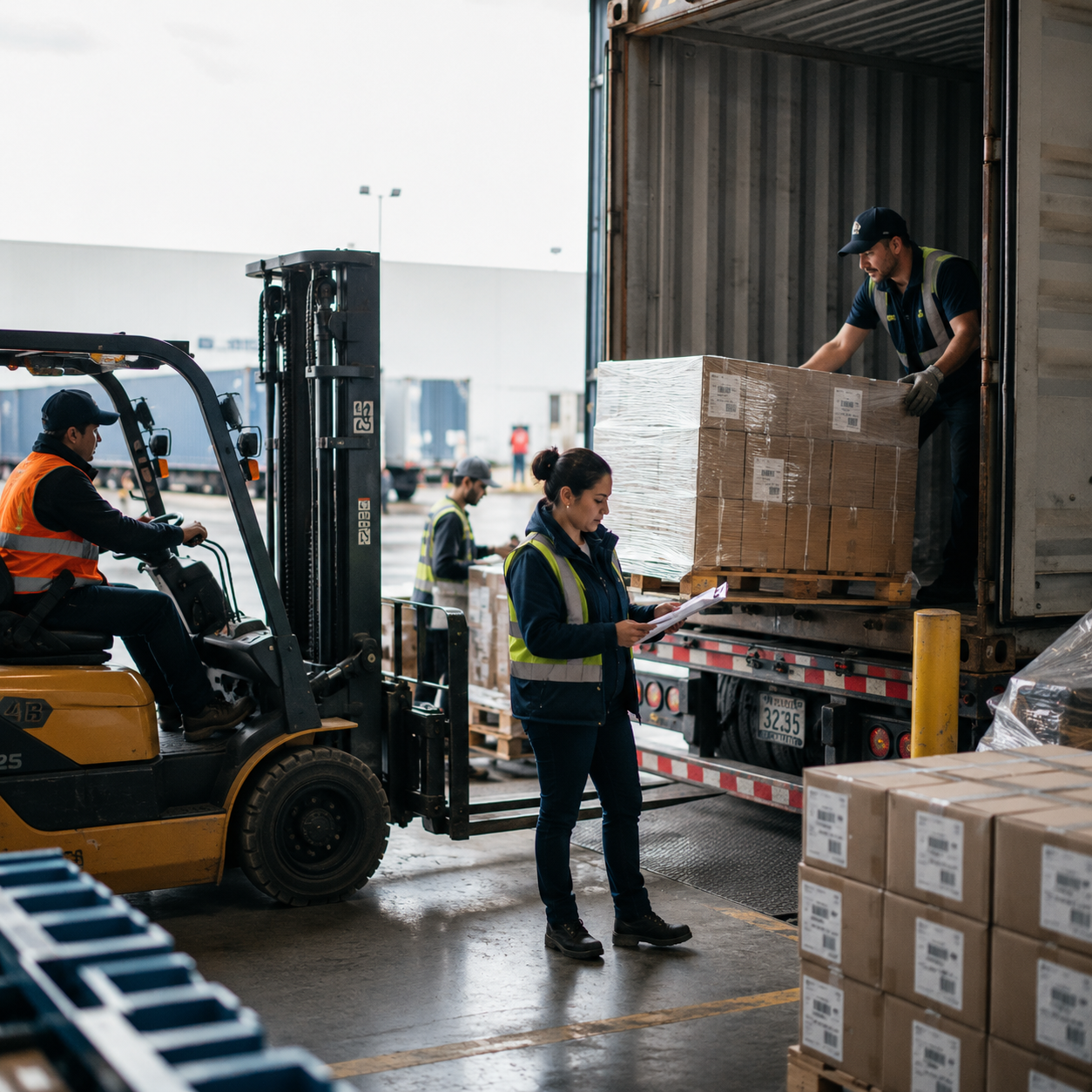
Import and export process inefficiencies develop when delays, manual work, and disconnected information interrupt the movement of goods from purchasing to final delivery. A single issue may seem manageable on its own, but repeated breakdowns across documentation, logistics, customs, inventory, and finance can quickly increase costs and slow the entire supply chain.
According to the OECD, improving the automation of border procedures, streamlining documentation, and strengthening coordination between border agencies could increase global goods exports by up to 18%. That finding highlights how process efficiency directly influences the speed, cost, and reliability of international trade.
Many importers and exporters don't intentionally create inefficient workflows. They evolve over time as spreadsheets, emails, standalone applications, and manual processes are introduced to support business growth. Without connected workflows, teams spend valuable time correcting documentation, chasing shipment updates, and reconciling information instead of keeping goods moving across borders.
Solutions such as NEX Import & Export Software help connect purchasing, inventory, warehousing, logistics, and accounting while allowing businesses to continue using QuickBooks as their financial system.
Every import and export operation follows a series of interconnected activities that move products from a supplier to the customer. While individual workflows vary by industry, product type, and destination market, most businesses rely on the same operational stages to coordinate purchasing, transportation, customs, warehousing, inventory, and financial management.
Rather than operating independently, each stage builds on the information created by the previous one. Purchase orders become shipping instructions. Shipping documents support customs clearance. Inventory receipts update warehouse records. Financial transactions rely on accurate purchasing, freight, and inventory data.
Because every stage is connected, a single process gap can quickly affect multiple departments. An inaccurate purchase order, a missing document, a delayed shipment update, or an inventory discrepancy rarely remains isolated. Instead, it creates additional work as teams spend time verifying information, correcting records, and communicating changes throughout the organization.
Understanding how the workflow fits together makes it easier to identify where inefficiencies develop and why seemingly minor issues often become larger operational problems.
The import-export process begins with sourcing products, evaluating suppliers, negotiating pricing, and issuing purchase orders. Businesses also establish delivery schedules, payment terms, product specifications, and import requirements that influence every stage that follows.
Decisions made during purchasing affect inventory planning, freight bookings, customs documentation, and financial reporting. If product information, quantities, pricing, or delivery expectations are inaccurate at this stage, downstream teams often spend additional time correcting issues that could have been prevented earlier in the workflow.
After purchase orders are confirmed, businesses work closely with suppliers to monitor production schedules, confirm shipment readiness, exchange documentation, and communicate changes before goods leave the country of origin.
Production delays, quantity adjustments, revised shipping schedules, or updated documentation requirements are common throughout international trade. Keeping those updates synchronized across purchasing, logistics, warehouse operations, and finance helps prevent miscommunication before shipments begin moving across borders.
Once products are ready for export, logistics providers coordinate freight bookings, transportation, cargo handling, and delivery schedules while managing the physical movement of goods through the global supply chain.
Throughout this stage, businesses track shipment milestones, carrier updates, freight costs, and estimated arrival dates. Maintaining visibility throughout transportation allows warehouse teams to prepare for inbound inventory, customer service to communicate accurate delivery expectations, and finance to anticipate upcoming operational costs.
International shipments rely on complete, accurate, and timely documentation. Commercial invoices, packing lists, bills of lading, certificates of origin, HS code classifications, and other documentation requirements help customs authorities verify shipments and support import and export compliance.
Even small documentation errors can interrupt customs processes. Missing information, inconsistent product descriptions, or incorrect classifications may result in additional inspections, shipment delays, or requests for revised paperwork before cargo can continue moving.
After shipments arrive, warehouse teams receive products, inspect cargo, verify quantities, update inventory records, and prepare goods for storage or fulfillment.
Receiving activities also confirm whether products match purchase orders and shipping documentation. Accurate inventory records improve stock visibility, support order fulfillment, and help finance maintain reliable inventory valuation. When discrepancies occur, businesses often need to investigate receiving records, shipping documents, and supplier information before inventory can be released for sale or production.
The final stage brings together purchasing, inventory, freight, duties, supplier invoices, and customer transactions to complete the financial side of the import-export process.
For many businesses, this involves reconciling landed costs, validating invoices, recording inventory values, and maintaining accurate financial records. As transaction volumes grow, finance increasingly depends on timely operational data generated by purchasing, logistics, warehouse, and inventory teams.
Businesses using QuickBooks often find that accounting remains effective, but maintaining connected operational workflows outside the accounting system becomes increasingly important as international operations expand.
Read More: Why Import and Export Businesses Outgrow QuickBooks Online
Import and export operations rarely become inefficient due to a single major failure. More often, small process gaps appear as information moves between purchasing, suppliers, logistics providers, warehouse teams, finance, and customer service. Individually, those gaps may seem manageable. Over time, however, they become embedded in daily operations and increase the effort required to move goods efficiently across borders.
The most common inefficiencies usually originate in the following areas:
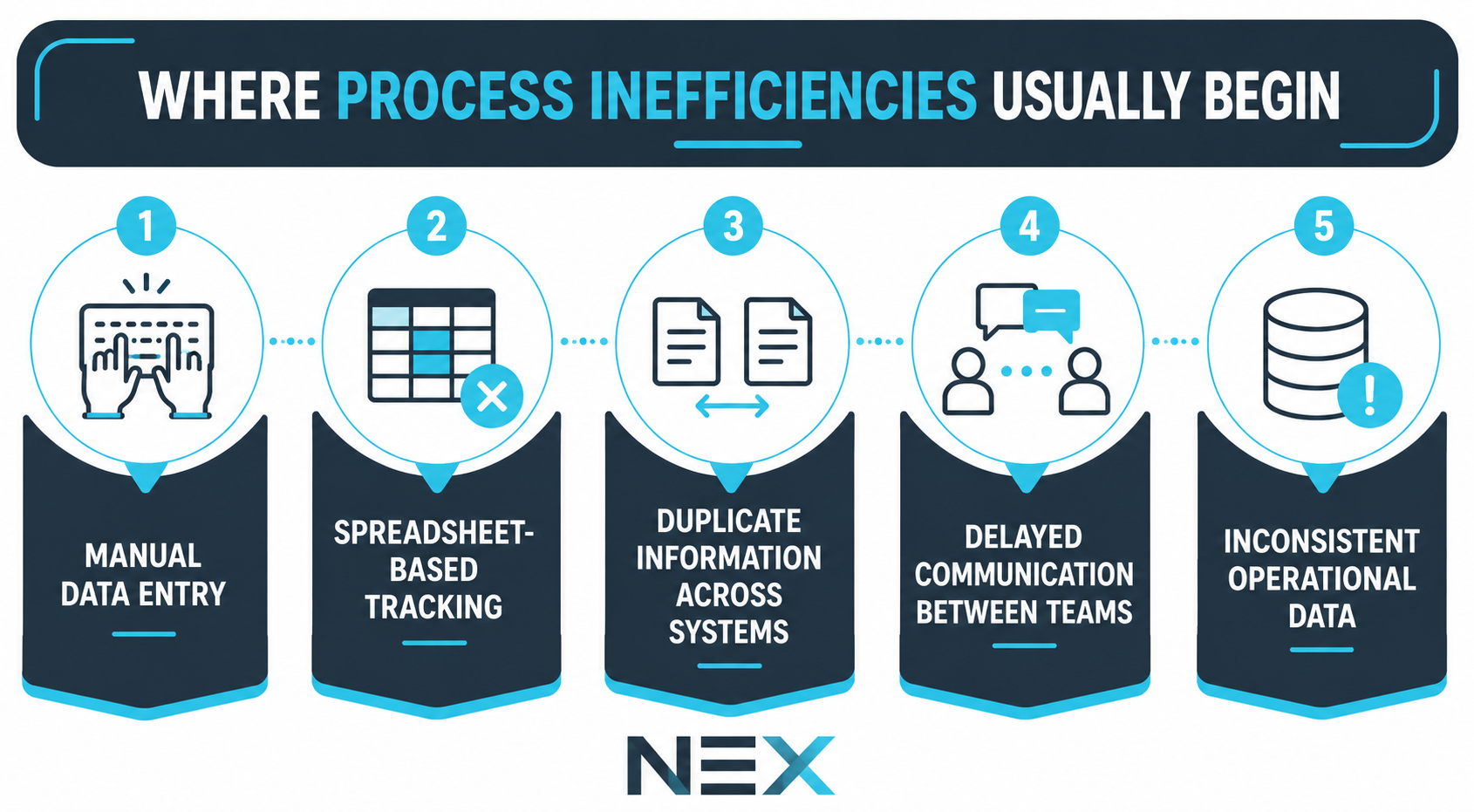
Many import and export businesses still rely on employees to transfer information between purchase orders, supplier documents, shipping platforms, inventory systems, accounting software, and spreadsheets.
Each time information is entered manually, the likelihood of inconsistencies increases. Product descriptions, quantities, HS code classifications, shipment dates, or invoice values can differ between systems, requiring additional verification before work can continue.
Beyond increasing the risk of documentation errors, repetitive manual data entry consumes valuable time that operations teams could otherwise spend managing suppliers, coordinating shipments, or resolving exceptions.
Spreadsheets remain one of the most common tools for managing import-export operations because they are flexible and easy to update. Many businesses use them to monitor shipment status, maintain supplier records, calculate landed costs, or track documentation requirements.
The challenge is that spreadsheets depend on manual updates. As shipment volumes increase, different departments often begin maintaining their own versions of the same information. Questions about inventory availability, shipment status, or customs documentation quickly become difficult to answer because multiple records exist for the same transaction.
Instead of providing visibility, spreadsheets gradually become another source of operational uncertainty.
Import and export workflows often involve accounting software, warehouse systems, freight portals, customs platforms, customer relationship management tools, and email. When those applications operate independently, employees frequently recreate the same information in multiple places to keep every system up to date.
Maintaining duplicate records increases administrative work while making it more difficult to determine which version is accurate. Correcting one record does not automatically update the others, allowing outdated information to remain in circulation throughout the workflow.
Import and export operations depend on timely communication between purchasing, suppliers, logistics providers, warehouse personnel, finance, and customer service.
When shipment schedules change, suppliers revise production dates, or customs authorities request additional documentation, every affected team needs access to the latest information. If those updates rely on emails, phone calls, or manual follow-ups, communication naturally slows as operational complexity increases.
Delays in communication often become delays in execution, affecting warehouse planning, customer commitments, and financial reporting.
Operational decisions are only as reliable as the information supporting them.
If purchasing references one shipment date while logistics tracks another, or inventory records differ from receiving documentation, teams spend more time validating information than completing work. Reporting also becomes less reliable because departments are working from different versions of operational data.
Consistent information across every stage of the workflow allows businesses to respond more quickly to disruptions, improve documentation accuracy, and maintain greater visibility across import-export operations.
Read Next: Why Freight Visibility Breaks Down Across Modern Supply Chains
Most operational inefficiencies develop gradually rather than appearing all at once. Businesses adapt by introducing another spreadsheet, another approval step, or another manual workaround to keep shipments moving.
Those short-term solutions often resolve immediate problems, but they also add complexity to the overall workflow. As transaction volumes increase, manual processes become harder to manage, communication slows, and maintaining accurate information requires increasingly more effort.
By the time delays begin affecting inventory availability, customs clearance, customer service, or financial reporting, the underlying issue is rarely a single process. It's the accumulation of small inefficiencies across the entire import-export workflow.
Not every operational issue begins with a missed shipment or a customs inspection. More often, delays start with routine tasks that seem insignificant at the time, such as an incorrect purchase order, an outdated inventory record, or a document that wasn't updated after a supplier changed a shipment date.
Because every stage of the import-export process depends on accurate information from the previous one, even a minor disruption can create additional work for multiple departments. Purchasing, logistics, warehouse operations, finance, and customer service all rely on the same operational data to keep goods moving efficiently across borders.
Over time, small delays stop being isolated incidents and become recurring operational costs that reduce productivity, increase administrative work, and make planning more difficult.
The purchasing stage establishes the timeline for nearly every activity that follows. When supplier confirmations arrive late, purchase orders contain inaccurate information, or production schedules change without being communicated promptly, every downstream process must adjust.
Warehouse teams may prepare for inventory that hasn't shipped, logistics providers may need to reschedule freight, and finance may revise purchasing forecasts based on outdated information. A delay that begins with one supplier can quickly affect multiple departments before the shipment even leaves the country of origin.
Import and export documentation supports customs clearance, freight coordination, and regulatory compliance. Commercial invoices, packing lists, bills of lading, certificates of origin, and HS code classifications all need to remain consistent throughout the shipment.
When information differs between documents or required paperwork is incomplete, customs authorities may request clarification before allowing cargo to proceed. Even if the issue is resolved quickly, businesses often incur additional administrative work, storage charges, or schedule changes that could have been avoided through better documentation accuracy.
Read More: 9 Documentation Mistakes to Avoid in Import and Export Operations
Warehouse operations depend on reliable inventory records to receive products, fulfill orders, and maintain stock availability.
If shipment quantities differ from purchase orders, receiving information isn't updated promptly, or inventory adjustments remain in spreadsheets instead of operational systems, planning becomes increasingly difficult. Teams may spend valuable time investigating discrepancies, conducting additional stock checks, or delaying customer orders while inventory records are verified.
The longer inaccurate inventory data remains unresolved, the more difficult it becomes to identify its original source.
Many import-export businesses continue to rely on email approvals, printed paperwork, and manual sign-offs to move transactions from one stage to the next.
While each approval may only take a few minutes, cumulative delays across purchasing, logistics, finance, and warehouse operations can significantly slow the overall workflow. Managers often spend more time following up on approvals than resolving operational issues that require their expertise.
As transaction volumes increase, these administrative bottlenecks become more noticeable and increasingly difficult to manage.
Accurate reporting depends on operational information arriving at the right place at the right time.
When purchasing, shipping, inventory, and finance maintain separate records, reports often reflect what happened yesterday rather than what is happening today. Leaders lose visibility into inventory availability, shipment status, landed costs, and purchasing activity until information has been manually reconciled.
Instead of supporting proactive decision-making, reporting becomes an exercise in explaining historical discrepancies.
Read More: The Hidden Landed Cost Mistakes Quietly Draining Your Import Export Margins
Every stage of the import-export process influences the next. When one activity slows down or relies on inaccurate information, the impact often extends beyond a single department. What begins as a purchasing issue may eventually affect customs clearance, inventory availability, customer deliveries, and financial reporting.
The following workflow map highlights where inefficiencies commonly occur, the operational consequences they create, and practical improvements businesses can implement to keep goods moving more efficiently.
The pattern is consistent across every stage of the workflow. Most inefficiencies originate when information is manually transferred, duplicated, or updated in multiple locations. As more suppliers, shipments, warehouses, and customers are added, those small process gaps become increasingly difficult to manage.
Businesses that regularly review each stage of their import-export process can identify recurring bottlenecks before they become larger operational problems. Standardized workflows, accurate documentation, and connected operational data help reduce manual work while improving visibility from purchasing through final delivery.
Read Next: Trade Compliance Audit Readiness: Best Practices for Importers and Exporters
Efficient import and export operations aren't defined by the number of systems a business uses. They're built on consistent processes that keep purchasing, logistics, customs, warehouse operations, inventory, and finance working from the same operational information.
While every organization has its own workflow, businesses with reliable import-export operations typically share these characteristics:
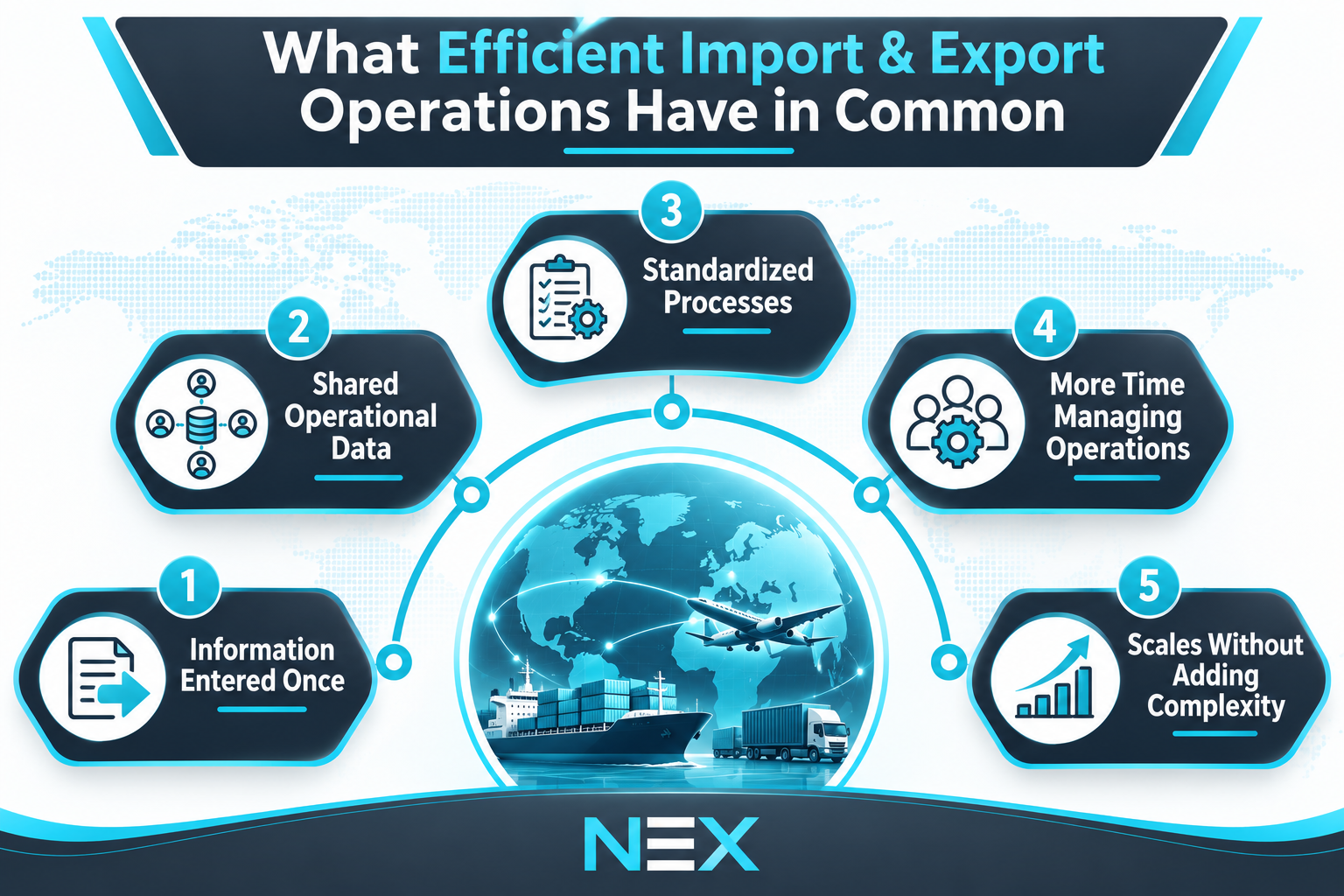
Information is entered once and shared across the workflow: Purchase orders, supplier records, shipment updates, inventory data, and financial information remain connected instead of being recreated across multiple systems or spreadsheets.
Every department works from the same operational data: Purchasing, warehouse operations, logistics, finance, and customer service all have access to current information, reducing unnecessary follow-ups and improving coordination when plans change.
Routine processes follow standardized procedures: Documentation, inventory receiving, shipment tracking, and operational approvals are completed consistently, making exceptions easier to identify and resolve.
Teams spend more time managing operations than updating records: Less manual data entry and fewer repetitive administrative tasks allow employees to focus on suppliers, shipments, customer service, and operational improvements.
Workflows can scale without adding complexity: As shipment volumes grow, connected processes help businesses manage more suppliers, warehouses, and international shipments without relying on additional spreadsheets or manual workarounds.
Taken together, these characteristics create a more resilient operation. Information moves more efficiently between departments, decisions are based on current operational data, and teams spend less time correcting avoidable issues that slow the movement of goods across borders.
Read More: 10 Best Inventory Management Software for QuickBooks (2026)
As import and export operations become more complex, maintaining efficient workflows becomes increasingly difficult when information is scattered across spreadsheets and disconnected systems. Purchasing, inventory, warehousing, logistics, and finance all depend on the same operational data, making consistency just as important as accuracy.
NEX Import & Export Software helps businesses connect these operational workflows into a single platform while continuing to use QuickBooks as their accounting system. By bringing purchasing, inventory, warehouse operations, logistics, and financial data together, businesses can reduce manual work, improve visibility, and maintain more consistent processes throughout the import-export lifecycle.
The objective isn't simply to implement new software. It's to support efficient workflows that allow information to move seamlessly across departments, helping teams spend less time reconciling data and more time managing suppliers, shipments, inventory, and customers.
Read Next: How to Manage Multi-Currency Accounting for Importers and Exporters
Import and export process inefficiencies rarely originate from a single mistake. More often, they develop as small gaps in purchasing, supplier communication, documentation, logistics, inventory, and finance gradually become part of everyday operations. Identifying those gaps early allows businesses to improve efficiency before they begin affecting costs, customer service, and long-term growth.
As international operations become more complex, maintaining connected workflows becomes just as important as maintaining accurate financial records. Businesses that regularly review their processes and eliminate unnecessary manual work are better positioned to respond to change, improve visibility, and keep goods moving efficiently across borders.
Key Takeaways
Review the entire import-export workflow instead of optimizing departments in isolation.
Reduce manual data entry wherever operational information is reused.
Standardize documentation and communication across teams.
Improve visibility between purchasing, logistics, warehouse operations, and finance.
Build workflows that can support business growth without increasing operational complexity.
For businesses looking to streamline international operations, NEX Import & Export Software helps connect purchasing, inventory, warehousing, logistics, and accounting into a single operational workflow while continuing to work with QuickBooks. The result is better visibility, fewer manual processes, and a stronger foundation for efficient global trade.
The most common import-export process inefficiencies include manual data entry, disconnected systems, spreadsheet-based tracking, documentation errors, poor communication between departments, and inconsistent operational data. These common issues often lead to customs clearance delays, additional administrative work, and reduced visibility across the supply chain.
Improving import and export compliance starts with maintaining accurate documentation, standardizing operational processes, and keeping records consistent across purchasing, logistics, inventory, and finance. Businesses should also stay informed about applicable trade regulations, tariff requirements, licensing requirements, and other documentation requirements to reduce the risk of compliance failures.
Some of the biggest pitfalls to avoid include relying on manual processes, maintaining duplicate records, using outdated spreadsheets, and failing to communicate operational changes across departments. These practices increase the likelihood of documentation errors, shipment delays, and higher operating costs as an import-export business grows.
Connected workflows help ensure documents are accurate, shipment information remains consistent, and operational updates are shared across departments. This improves customs clearance, strengthens trade compliance, and reduces the likelihood that shipments will be delayed or held at the port because of incomplete or incorrect information.
Not necessarily. Smaller businesses with straightforward operations may manage effectively using existing systems. As transaction volumes grow, however, many businesses find that connected import and export software helps streamline logistics management, improve visibility across the supply chain, reduce manual work, and support sustainable growth in global business while continuing to use their existing accounting system.

Discover how disconnected systems create hidden costs for importers and exporters, and how connected workflows improve visibility and productivity.

QuickBooks Online has limitations for import export businesses. Learn how landed costs, documentation, and inventory visibility create workflow gaps.
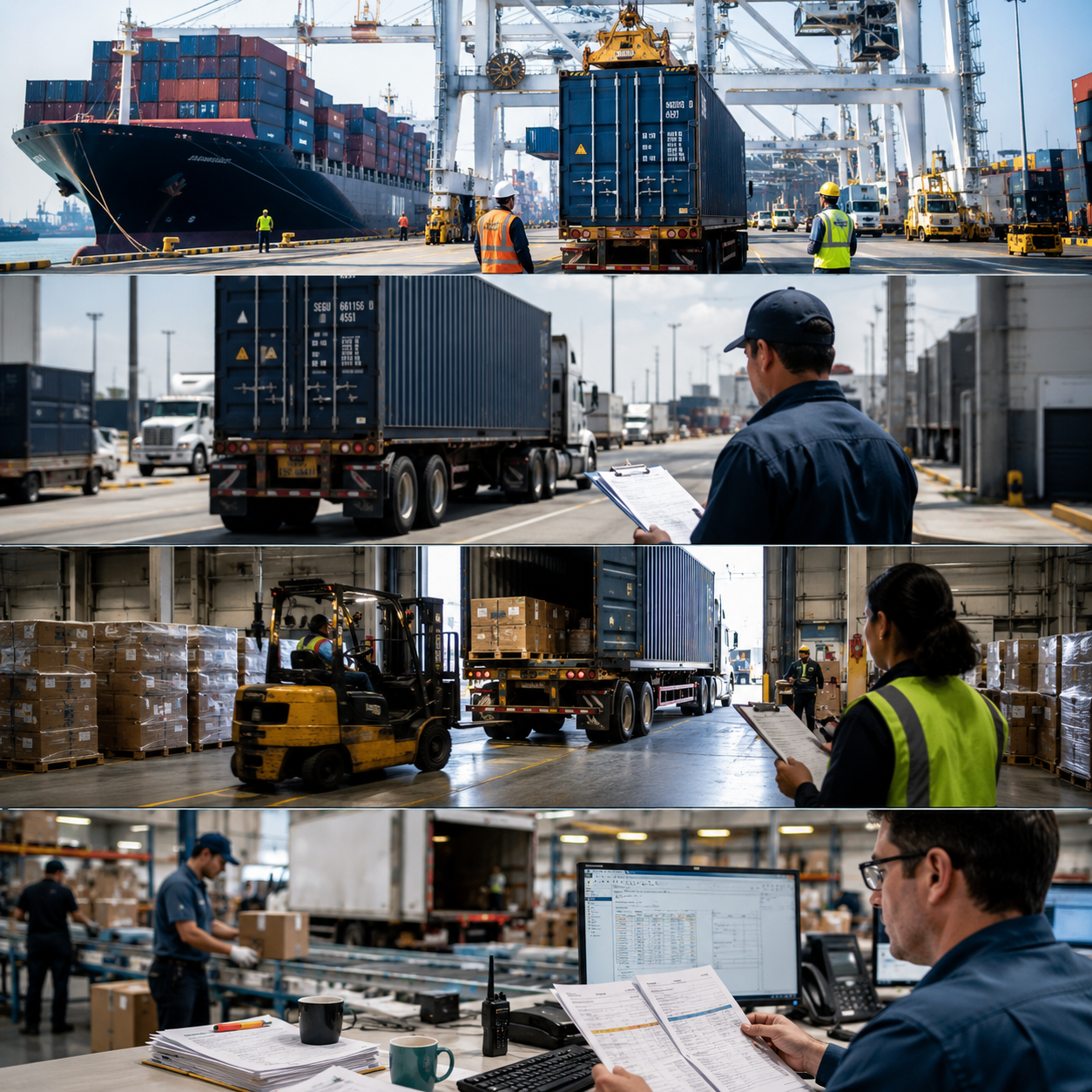
Freight visibility issues create blind spots across shipments and carriers. Learn how real-time freight visibility improves supply chain performance.