
Why Import and Export Businesses Outgrow QuickBooks Online
QuickBooks Online has limitations for import export businesses. Learn how landed costs, documentation, and inventory visibility create workflow gaps.

Discover how NEX significantly enhanced First Atlantic Commerce's
operations, billing processes, and overall data management efficiency.
10 min read

Disconnected systems create hidden operational costs by forcing importers and exporters to manage purchasing, inventory, logistics, finance, and customer information across multiple tools that do not communicate with one another.
According to the IBM Institute for Business Value's 2025 CDO Study, 77% of organizations say data silos limit their ability to perform real-time analytics and make data-driven decisions. For importers and exporters, fragmented information can delay reporting, reduce operational visibility, and slow responses to inventory, shipment, and customer issues.
Most businesses don't intentionally create disconnected operations. As they grow, they add spreadsheets, freight portals, customs broker platforms, warehouse applications, and standalone software to support new processes. Over time, information becomes scattered across systems, leaving teams to reconcile data instead of acting on it.
Solutions like NEX Import & Export Software help connect purchasing, inventory, logistics, warehouse operations, and accounting while allowing businesses to continue using QuickBooks as their financial system.
Disconnected trade systems are separate business applications, spreadsheets, emails, and portals that support different parts of the import and export process but don't consistently share information. As a result, employees often move data manually between systems, verify records across departments, and rely on workarounds to keep operations moving.
For many businesses, this isn't the result of poor planning. It develops gradually as operations become more complex and new tools are introduced to solve individual challenges.
Few businesses begin with a fragmented software environment. Most start with a small number of applications that meet their immediate operational needs. As transaction volumes increase, new tools are added to manage inventory, warehouse operations, shipping, customs documentation, customer relationships, and financial reporting.
Each system may perform its intended function well. The challenge arises when information must move between departments that rely on different applications, creating manual processes that grow alongside the business.
Importers and exporters often rely on multiple systems to manage day-to-day operations. Each platform supports a specific function, but information frequently needs to move between them before work can continue.
Individually, these tools provide value. The operational challenge begins when employees must manually transfer information from one system to another because critical workflows are no longer connected.
Disconnected systems rarely create problems because they exist. They create problems when departments can no longer rely on the same operational information.
A supplier updates a shipment date, but purchasing receives the notification before logistics. Warehouse staff prepare for inventory that hasn't arrived. Finance records an invoice before freight costs have been finalized. Customer service responds to inquiries using outdated shipment information because the latest update exists in a different application.
Each department continues working, but not from the same version of the truth. Over time, these small disconnects become operational silos that slow decision-making, increase manual reconciliation, and reduce visibility across the business.
Read More: Still Using Spreadsheets For Import Export? The Hidden Cost Is Higher Than You Think
Disconnected systems rarely disrupt an import or export operation all at once. Instead, they create small gaps throughout the workflow as information moves between purchasing, inventory, warehousing, logistics, finance, and customer service. Each gap may seem manageable on its own, but together they slow decision-making, increase manual work, and reduce visibility across the business.
As operations become more complex, employees spend less time managing shipments and customers and more time searching for information, updating spreadsheets, and verifying records across multiple systems. Over time, those workarounds become part of the daily workflow, making them difficult to recognize until they begin affecting productivity and profitability.
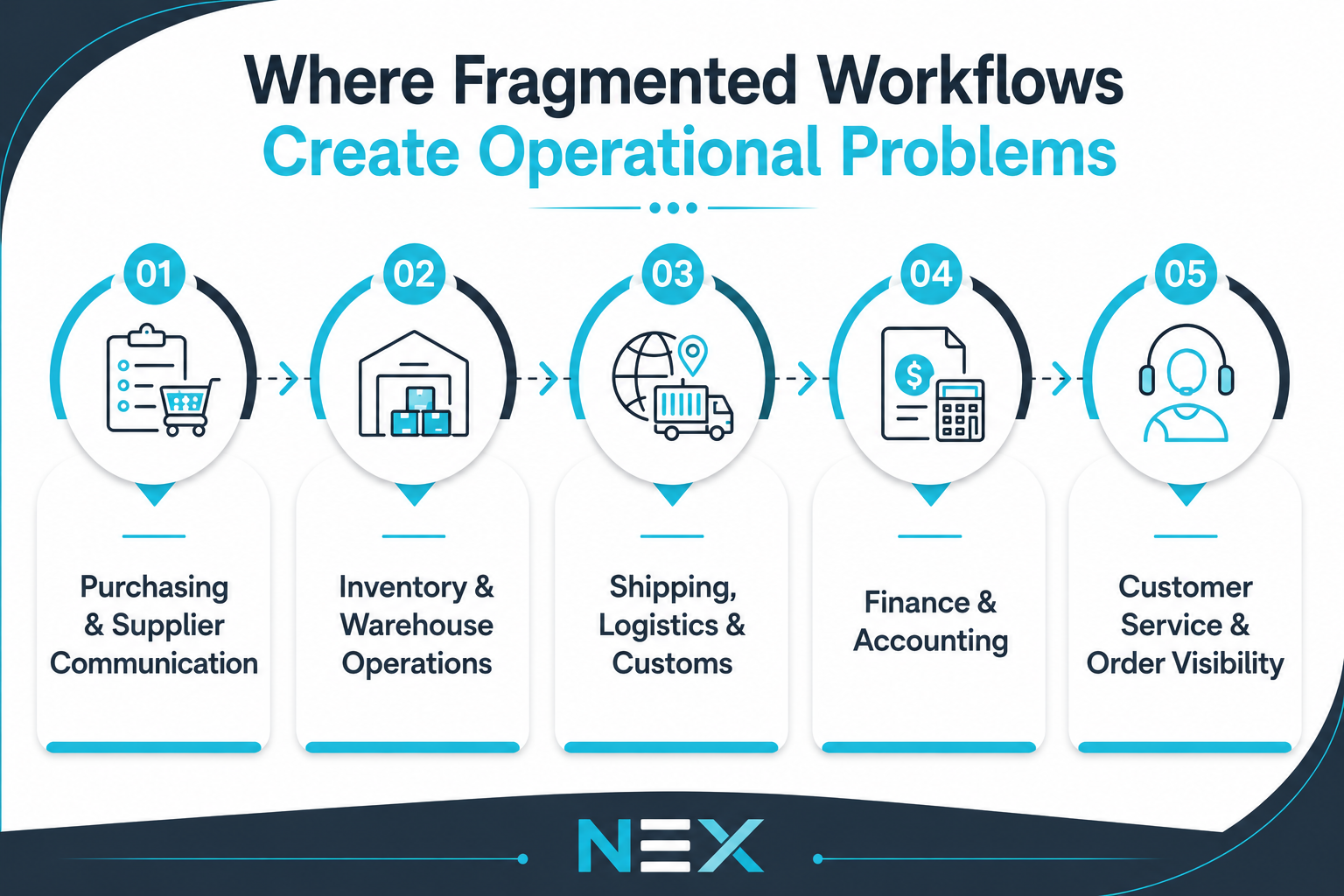
Purchasing teams are often the first to receive changes from suppliers. Production schedules shift, purchase orders are revised, shipment dates change, and pricing is updated as orders move toward fulfillment.
When those updates remain in email threads or isolated procurement systems, other departments continue working with outdated information. Warehouse teams prepare for inventory that has been delayed, logistics teams schedule transportation based on previous timelines, and finance records transactions before operational changes have been communicated.
Because purchasing influences every downstream activity, even a small communication gap can ripple across the entire supply chain.
Inventory data changes continuously as products are received, transferred, picked, packed, and shipped. Warehouse teams rely on accurate inventory records to keep operations moving, but those records lose value when they aren't shared consistently with the rest of the business.
If purchasing, customer service, and finance each reference different inventory information, stock discrepancies become more difficult to identify. Teams may reorder products unnecessarily, commit inventory that is no longer available, or spend valuable time reconciling inventory balances instead of fulfilling customer orders.
Read More: Why Inventory Visibility Breaks and How Leading Teams Are Fixing It
International shipments generate a constant stream of operational updates. Freight forwarders provide shipment milestones, customs brokers process documentation, carriers revise estimated arrival dates, and transportation costs continue changing while goods are in transit.
Without connected workflows, these updates remain scattered across carrier portals, broker platforms, emails, and spreadsheets. Operations teams often spend more time gathering information than acting on it, making it harder to coordinate deliveries, respond to customer inquiries, or adjust plans when unexpected delays occur.
In many cases, the delay isn't caused by transportation itself. It's caused by the time required to piece together information from multiple disconnected sources.
Read More: Freight Visibility Issues: Why Importers Lose Track of Shipments
Finance depends on accurate operational data to produce reliable financial reports.
Supplier invoices, freight charges, customs duties, landed costs, and inventory receipts all contribute to the final financial picture. When those records originate from disconnected workflows, finance teams often spend days validating transactions, investigating inconsistencies, and reconciling information before month-end reporting can begin.
QuickBooks remains a strong accounting platform for many importers and exporters. As international operations grow, however, finance benefits from connected workflows that keep purchasing, inventory, logistics, and accounting aligned throughout the order lifecycle rather than relying on manual reconciliation after the fact.
Read Next: Tracking Landed Costs & Compliance in QuickBooks: A Guide for Importers & Exporters
Customers expect timely and accurate updates, regardless of how many internal systems a business uses.
When shipment status, inventory availability, purchase orders, and customer records are spread across multiple applications, customer service teams often need to contact other departments before answering even routine questions. What should be a quick response becomes a series of internal follow-ups that slow service and reduce confidence in the information being shared.
Giving customer-facing teams access to the same operational data used by purchasing, warehouse, logistics, and finance creates a more consistent customer experience while reducing the manual effort required to locate information.
Few importers and exporters intentionally build disconnected operations. Most start with a small number of business applications that meet their immediate needs. As the company grows, new software, spreadsheets, and manual processes are introduced to solve specific operational challenges.
Each addition makes sense on its own. Over time, however, information becomes scattered across multiple systems, departments, and workflows. What began as a practical solution gradually turns into a fragmented operating environment that is increasingly difficult to manage. The progression often looks something like this:
The transition from one stage to the next is rarely obvious. Businesses adapt to each new challenge by adding another application, another spreadsheet, or another manual process. Eventually, the work required to keep systems synchronized begins to outweigh the value those additional tools provide.
This is often the point where organizations recognize that the issue isn't the number of systems they're using. It's the lack of connected workflows that allows information to move consistently across purchasing, inventory, logistics, finance, and customer service.
Read More: QuickBooks Import & Export Limitations: When Growing Businesses Need More Connected Workflows
Improving disconnected workflows isn't about replacing every system your business already uses. Most importers and exporters rely on specialized applications to manage accounting, inventory, warehousing, shipping, and customer relationships. The challenge is ensuring those systems support the same business process instead of creating separate versions of it.
The following practices can help reduce operational complexity, improve data accuracy, and create workflows that are easier to manage as your business grows.
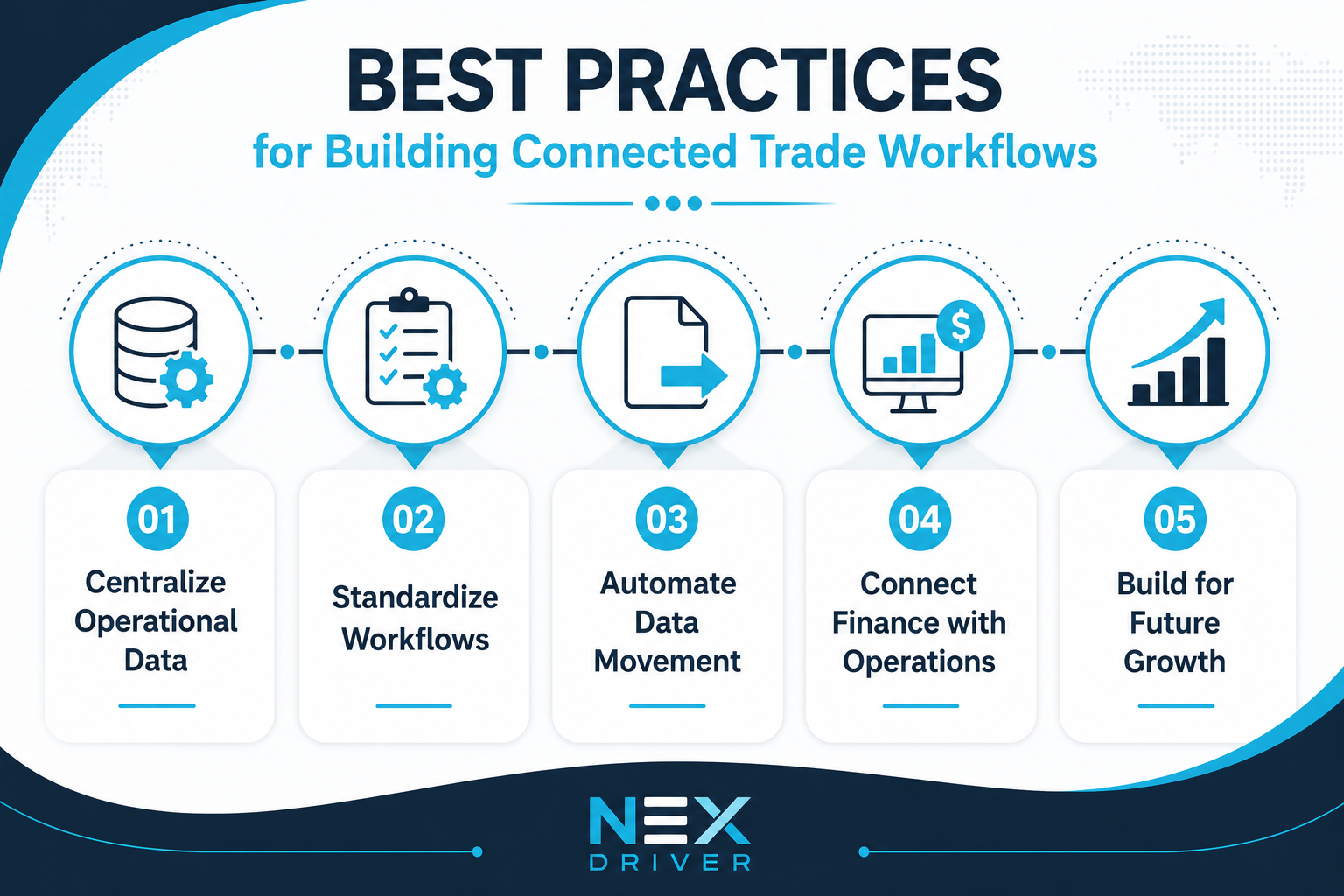
Operational data should be entered once and shared across the business instead of being recreated in multiple systems.
When purchasing, inventory, logistics, warehouse, and finance teams work from a shared source of operational data, businesses reduce duplicate data entry, improve reporting accuracy, and eliminate many of the inconsistencies caused by disconnected workflows. Teams spend less time validating information and more time responding to operational priorities.
Even the best software cannot compensate for inconsistent business processes. Establishing standardized workflows for purchasing, inventory updates, shipment tracking, approvals, and financial reconciliation helps ensure that information moves consistently from one department to the next.
It also reduces the reliance on emails, spreadsheets, and manual follow-ups that often develop as businesses grow. Documented processes make onboarding easier, improve accountability, and reduce the likelihood of errors when responsibilities change between teams.
Manual data entry is one of the most common symptoms of fragmented operations.
Routine activities such as creating purchase orders, updating shipment milestones, synchronizing inventory records, and sharing financial data are well suited for automation. Reducing repetitive administrative work allows employees to focus on exceptions, customer needs, and operational decisions instead of maintaining records across multiple systems.
As transaction volumes increase, automation also helps businesses scale without increasing administrative overhead.
Read Next: Identifying and Overcoming Operational Bottlenecks in Your Business
Financial reporting is most valuable when it reflects what's happening across the rest of the business.
Purchasing decisions, inventory movements, freight costs, warehouse activity, and supplier invoices all contribute to the final financial picture. Keeping these workflows connected helps finance teams spend less time reconciling information and more time analyzing performance, managing cash flow, and supporting operational planning.
For businesses using QuickBooks, connected operational workflows can extend the value of the accounting system without replacing the financial processes teams already know.
Operational complexity tends to increase with every new supplier, warehouse, shipping lane, and international customer. Businesses that continue adding disconnected tools often create more manual work as they expand. A more sustainable approach is to design workflows that can support higher transaction volumes without requiring additional spreadsheets, duplicate data entry, or manual reconciliation.
Planning for scalability early helps maintain visibility, improve collaboration across departments, and reduce the operational costs that often accompany business growth.
Read More: Supply Chain Management Issues That Limit Business Growth
Connected workflows are easier to achieve when operational data flows through a unified platform instead of remaining scattered across disconnected systems.
An integrated import and export platform connects purchasing, inventory, warehousing, logistics, and finance so departments work from the same operational data throughout the order lifecycle. This reduces manual work, improves visibility, and helps teams respond more quickly to changing business conditions.
For businesses using QuickBooks, integrated import and export software extends existing accounting processes by connecting financial data with day-to-day operations. Finance gains greater visibility into purchasing, inventory, landed costs, and logistics while continuing to use QuickBooks as its accounting system.
Ultimately, long-term operational improvements depend less on adding new software and more on ensuring information moves consistently across the business.
Read Next: CRM & ERP Integration Guide: Connecting Your Business Systems
Disconnected systems rarely become a business problem overnight. They develop gradually as organizations add new tools, processes, and workarounds to support growth. While each solution may address an immediate need, fragmented workflows eventually make it harder for teams to share information, respond quickly, and make confident operational decisions.
Building connected operations doesn't mean replacing every existing application. It means ensuring purchasing, inventory, warehousing, logistics, finance, and customer service work from the same operational data so information moves with the business instead of between disconnected systems.
As you evaluate your current operations, consider whether your existing workflows support the way your business operates today and whether they'll continue supporting the way you plan to grow tomorrow.
Key takeaways:
Businesses looking to unify purchasing, inventory, warehousing, logistics, and accounting can explore NEX Import & Export Software to create connected operational workflows while continuing to use QuickBooks as their accounting system.
The hidden costs of disconnected systems extend beyond software expenses. When systems don't communicate, businesses often experience repetitive manual data entry, fragmented data, reporting delays, higher operational costs, and slower decision-making. Over time, these inefficiencies affect productivity, customer experience, and the ability to respond quickly to changes across the supply chain.
Yes. Many importers and exporters continue using their existing systems, including QuickBooks, warehouse software, and inventory systems. Modern integration approaches use APIs and connected workflows to streamline the flow of information between critical systems, reducing manual processes while allowing businesses to preserve their current technology investments.
When tools are disconnected, operational data becomes fragmented across multiple applications, making it difficult to maintain a single source of truth. Teams spend more time verifying shipment status, inventory availability, customer records, and shipping costs instead of responding to operational issues. This lack of integration creates bottlenecks that reduce agility and increase the cost and time required to complete everyday workflows.
A unified system should connect purchasing, inventory, warehousing, logistics, finance, and customer information through one platform that supports connected systems and seamless data flow. The goal isn't simply to build an integration between applications, but to ensure departments work from the same operational data throughout the order lifecycle.
As transaction volumes increase, connected workflows help businesses reduce costs, improve operational agility, and maintain visibility across the supply chain. They also provide a stronger foundation for emerging capabilities, including AI-driven supply chain planning, by ensuring operational data is accurate, consistent, and readily available across the business.

QuickBooks Online has limitations for import export businesses. Learn how landed costs, documentation, and inventory visibility create workflow gaps.

Identify import and export process inefficiencies, avoid costly delays, and improve global trade workflows with better operational processes.
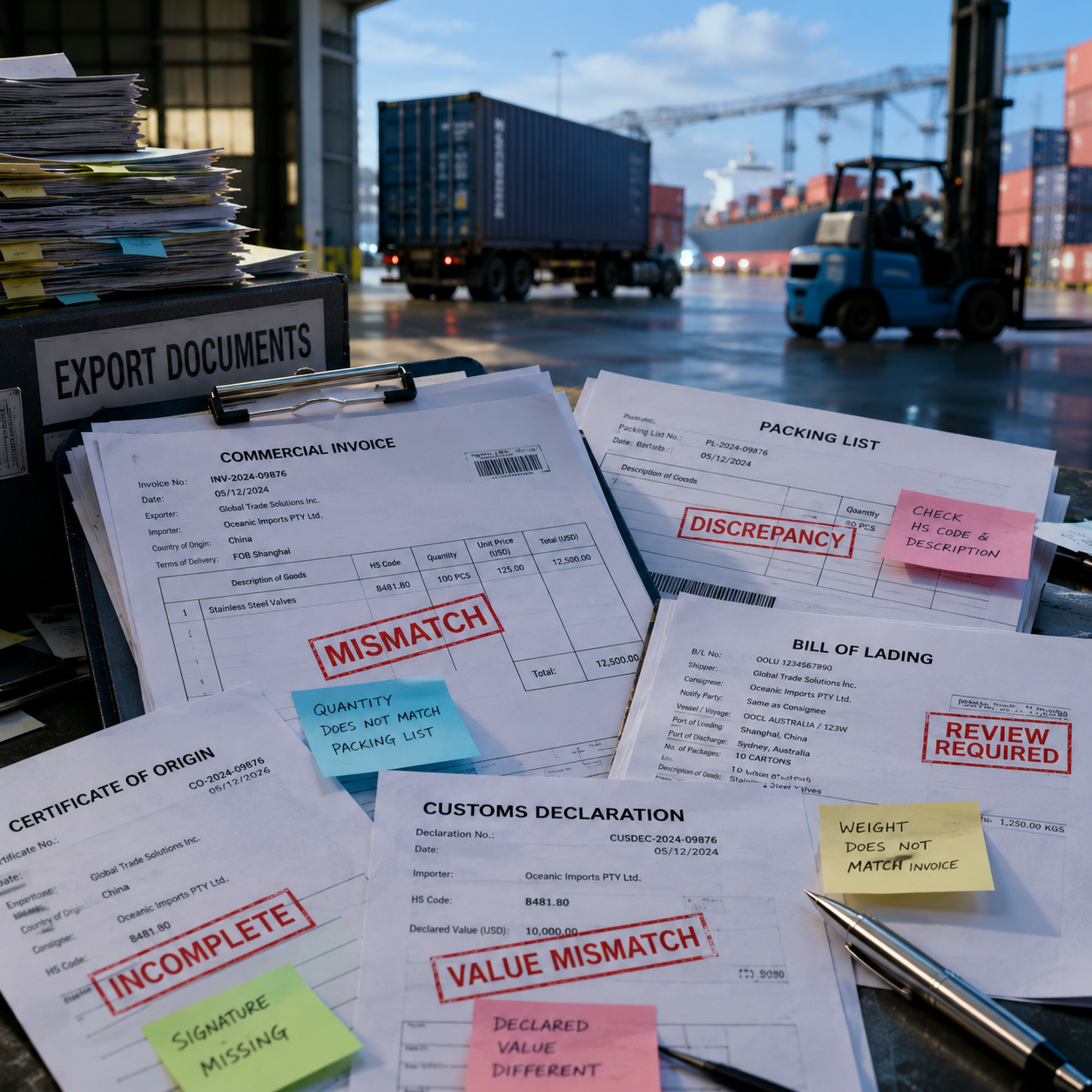
Learn how import and export documentation mistakes cause customs delays, fines, shipment holds, and compliance risks for growing businesses.