7 min read

How Do You Optimize Warehouse Pick and Pack Operations for Speed and Accuracy?

Are your warehouse operations running efficiently, or are delays and errors quietly draining your bottom line? For logistics managers and SMEs, pick and pack is the frontline of fulfillment. It determines how quickly and accurately your team can process orders, and how reliably you meet customer expectations.

Many warehouses still rely on outdated layouts and manual processes that slow down picking and increase fulfillment errors. These inefficiencies ripple across labor costs, inventory accuracy, and customer satisfaction. 

According to Yale’s 2025 DC Metrics Benchmark, best-in-class operations achieve 99.68% order picking accuracy. If you’re falling short of that, inefficiencies are likely eating into your margins. This guide gives you practical strategies to improve accuracy, reduce delays, and streamline your fulfillment process without adding unnecessary complexity or cost.


Why the Pick and Pack Process Drives Warehouse Efficiency

Pick and pack is one of the most critical processes in a warehouse. It involves selecting items from inventory and packaging them for shipment, but in practice, the process affects nearly every aspect of warehouse performance. From how inventory is organized to how quickly items reach the packing station, the speed and accuracy of picking directly influence your fulfillment outcomes.

For logistics teams managing high order volumes, a poorly optimized pick-and-pack process leads to missed shipments, packing errors, wasted labor, and rising shipping costs. It also increases the likelihood of damaged goods, returns, and poor customer experience. In contrast, an efficient pick and pack method can significantly reduce travel time, improve order accuracy, and keep throughput consistent even during peak demand.

Optimizing this process isn’t about working faster. It’s about working smarter. With the right warehouse layout, real-time inventory visibility, and clear picking strategies, you can eliminate bottlenecks and gain tighter control over fulfillment costs.


Common Challenges in Pick and Pack Fulfillment

Even the most advanced warehouse operations run into roadblocks when the pick and pack process isn’t fully optimized. These issues often appear routine but can create serious inefficiencies in fulfillment operations, especially as order volumes grow and customer expectations rise.

Inventory Mismanagement

When inventory records are inaccurate or out of sync with real-time data, pickers spend extra time locating SKUs or picking incorrect items. Miscounts lead to stockouts, overstocking, and incorrect shipments, all of which reduce the accuracy of order fulfillment and erode customer trust. This is often a sign that your warehouse management system (WMS) isn’t integrated properly with your inventory tracking, or that manual inputs are causing data drift.

Poor Warehouse Layout

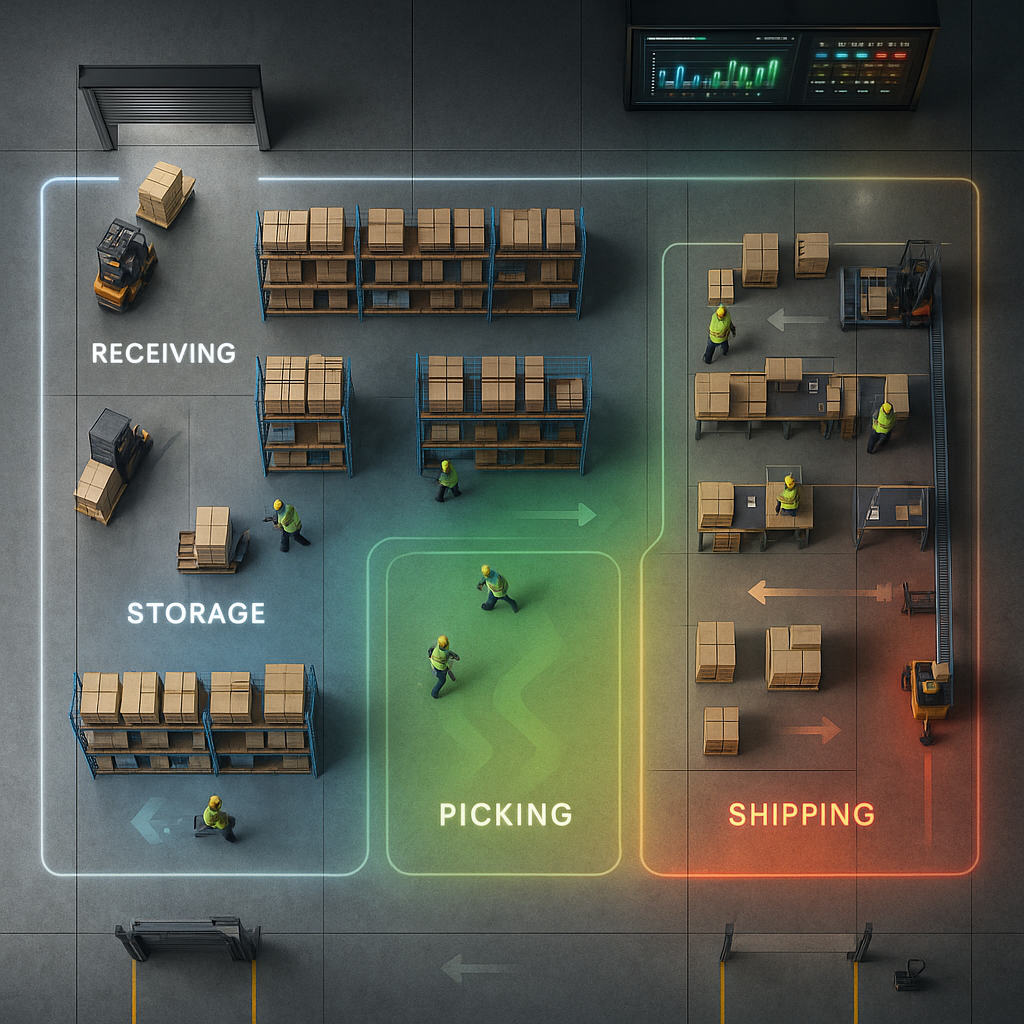
A disorganized or outdated warehouse layout adds unnecessary travel time for workers. When fast-moving items are stored far from packing stations or grouped inefficiently, picker movement increases, throughput drops, and labor fatigue rises. Without intentional layout zoning or optimized shelf placement, even the best pick and pack methods can’t reach full efficiency. Over time, this layout friction can drive up labor hours and delay order turnaround.

Inefficient Labor Allocation

Understaffed or improperly trained teams struggle to keep up with fluctuating order volumes. Without cross-training or workforce flexibility, peak periods cause bottlenecks at both the picking and packing stages. Many warehouses cannot shift resources dynamically based on order volume. A modern WMS can help forecast labor needs and distribute tasks more efficiently, but these tools are only as good as the workflows they support.

High Error Rates in Fulfillment

Picking errors and incomplete shipments lead to rework, returns, and higher shipping costs. These mistakes are often symptoms of poor process control, weak SOPs, or a lack of barcode scanning and verification systems. In fast-paced environments, even small breakdowns in the picking process can compound across multiple orders, especially when workers are under time pressure. A few consistent mis-picks per shift can ripple into hundreds of dissatisfied customers over time.


Core Principles to Optimize Pick and Pack Methods in Warehouse Operations

Improving the pick and pack process in a warehouse takes more than rearranging shelves. To truly optimize warehouse operations, you need core principles that support scalability, accurate picking, and process control. These foundations help warehouse managers streamline workflows, reduce errors, and improve efficiency as order volumes grow.

Accuracy vs. Speed in the Picking Process

In the picking process, faster is not always better. Workers who pick items quickly but make frequent mistakes add more cost than value. Accurate picking reduces returns, improves order fulfillment reliability, and protects customer experience. To optimize pick and pack fulfillment, define acceptable error rates and monitor how layout, staff training, and routing changes affect speed and accuracy.

Scalable Pick and Pack Fulfillment Process Design

A picking method that works at low volume may fall apart during peak demand. To optimize your warehouse for scalability, implement zone picking, batch picking, and wave picking strategies. These approaches help workers pick multiple orders efficiently, reduce travel time, and improve the overall picking flow. Warehouse staff must also be trained to shift between picking methods as volume and product mix change.

Data-Driven Decisions in Warehouse Management Systems

Guessing is not a strategy. Modern warehouse management software provides real-time visibility into order accuracy, picker performance, and fulfillment speed. Use this data to evaluate your warehouse layout, identify bottlenecks, and adjust pick paths or packing station placement. Optimizing pick and pack warehouse operations means building a management system that can guide improvements based on measurable results.


Best Practices to Optimize the Pick and Pack Process in a Warehouse

The pick-and-pack process is essential to order fulfillment and customer satisfaction. When done right, it can lower operational costs, improve accuracy, and support warehouse scalability. For logistics managers and fulfillment teams looking to streamline warehouse operations, these best practices deliver measurable impact.

Streamline Your Warehouse Layout for Efficient Picking

Optimizing your warehouse layout is the fastest way to improve picking efficiency. Place high-frequency SKUs close to packing stations and organize zones by velocity to reduce picker travel time. In high-volume environments, zone picking and batch picking allow workers to handle multiple orders with fewer interruptions.

According to research published in ScienceDirect, order picking can account for more than 50% of total warehouse operating costs. A well-zoned layout can significantly reduce this burden by cutting down unnecessary picker travel. Simple changes like labeling warehouse shelves clearly, reorganizing the pick list by zone, or using ergonomic packing stations also help reduce strain and improve speed.

Leverage a Warehouse Management System (WMS) for Inventory Accuracy

A warehouse management system is the foundation of any modern fulfillment center. It enables real-time inventory management, task automation, and picker accountability. Barcode scanning, RFID, and mobile pick instructions ensure workers pick items correctly the first time. These technologies help reduce errors, improve accuracy, and simplify onboarding for seasonal warehouse staff.

Even affordable tools like handheld scanners or light-directed picking systems can increase picking speed and cut mis-picks in half. Every tech investment should connect directly to a measurable fulfillment KPI.

Standardize Processes and Train for Flexibility

Clear SOPs eliminate guesswork and reduce variability in the picking method. Step-by-step instructions, checklists, and visual guides improve training speed and increase consistency. This is especially valuable for e-commerce businesses that rely on temporary labor during seasonal spikes.

Cross-training your team across zones and packing stations builds resilience and reduces fulfillment delays. Workers who understand the entire pick and pack process can shift roles quickly, reducing bottlenecks when order volumes spike.

Improve Inventory Visibility and Reduce Exceptions

Optimizing inventory visibility prevents wasted picks and improves order accuracy. Cycle counting routines that sync directly with your WMS can replace year-end counts. These incremental checks identify shrinkage and data mismatches before they disrupt fulfillment.

Tighter inventory control improves the accuracy of the pick list, reduces confusion, and shortens the time it takes for workers to pick items. Inaccurate inventory data is one of the fastest ways to sabotage even the best picking methods.

Measure Performance and Continuously Optimize Your Warehouse

Fulfillment operations must be monitored and refined constantly. Use KPIs like pick rate, accuracy rate, and labor cost per order to find gaps in performance. Conduct weekly walk-throughs and spot audits to catch problems that data might miss, such as poor packing materials, misplaced SKUs, or inefficient traffic flow.

Optimization is not a one-time fix. It's a continuous process that requires visibility, flexibility, and accountability. The best pick and pack services are those that evolve based on real-time performance insights, supported by a well-structured management system.

With these best practices in place, warehouse managers can cut waste, improve order fulfillment, and deliver a more reliable customer experience, whether you're running a traditional warehouse or a third-party logistics operation.


Tools and Warehouse Help to Optimize Your Pick and Pack Process

Technology alone will not solve your fulfillment problems, but the right warehouse tools can simplify complex workflows and improve speed, accuracy, and resource utilization across your picking operations.

WMS and ERP Integration for Efficient Pick-and-Pack Fulfillment

Integrating your warehouse management system (WMS) with ERP software aligns inventory, sales, and shipping processes in real time. A connected system reduces manual errors, eliminates duplicate data entry, and enhances visibility across the entire order fulfillment process. This improves the picker experience and shortens delivery timelines.

Choose a WMS that supports advanced picking methods such as batch picking, wave picking, and zone picking. These functions allow warehouse labor to move with more precision and handle higher volumes without breaking down.

How Nex Driver Helps Optimize Your Warehouse Operations

Nex Driver’s warehouse management software supports logistics managers by making pick and pack warehouse services faster, more accurate, and easier to scale. Its platform offers real-time inventory tracking, automated task workflows, and performance dashboards designed for warehouse staff.

You can use Nex Driver's WMS to design more efficient picking paths, streamline your packing process, and manage labor more effectively. Whether you’re a traditional warehouse or a third-party logistics provider, this gives your team the tools needed to reduce fulfillment costs and improve customer satisfaction.

With the right warehouse help, tools, and management system in place, your fulfillment operations can move from reactive to proactive, driving measurable gains across the entire pick and pack fulfillment process.


Real Results: How Broonson Optimized Pick and Pack with NEX

When Broonson International, a global food trading company, struggled to keep up with growing shipment volumes, its fulfillment process began to break down. Manual systems, disconnected spreadsheets, and third-party tools introduced friction at every stage. Tasks were missed, data was re-entered across platforms, and costly shipping errors increased.

They turned to NEX for a solution.

The NEX team implemented a tailored workflow that unified sales, shipping, and invoicing in one platform. With modules for document automation, task tracking, and real-time collaboration, Broonson eliminated manual rework and reduced duplication across departments.

What Changed:

  1. Over 8 hours saved per week through automation
  2. Complete visibility into the order lifecycle, from quote to shipment
  3. Fewer errors and faster throughput across all fulfillment stages
  4. No more switching between platforms or losing key shipping details

Every step in the pick and pack process is now tracked, assigned, and verified within NEX. The Broonson team now manages fulfillment with greater speed, control, and confidence. This shift demonstrates that scaling warehouse operations does not require adding complexity. It requires the right tools and systems.


Final Thoughts on Optimizing Pick and Pack Operations

Optimizing your pick and pack process is one of the fastest ways to improve fulfillment performance and reduce operational waste. From layout changes to better data visibility, even small improvements can lead to measurable gains in speed, accuracy, and customer satisfaction.

But sustainable optimization takes more than isolated fixes. It requires a connected warehouse system that gives your team control, accountability, and flexibility as your order volume grows.

Ready to improve accuracy, lower costs, and scale fulfillment with less complexity? Explore Nex Driver’s Warehouse Management Software to streamline your operations from pick to pack.

What is a Warehouse Management System (WMS)?

What is a Warehouse Management System (WMS)?

Warehouse Management Systems (WMS) are essential for optimizing warehouse operations. They provide real-time inventory tracking and streamline...

Read More
Rethinking Warehouse Automation: Myths vs. Reality

6 min read

Rethinking Warehouse Automation: Myths vs. Reality

Content Review Pro said: Rethinking Warehouse Automation: Myths vs. Reality Warehouse automation is no longer a futuristic perk...

Read More
How Integrated Inventory Management Systems Eliminate Errors and Scale Operations

6 min read

How Integrated Inventory Management Systems Eliminate Errors and Scale Operations

Inventory errors are costly. Excess stock inflates storage costs, while stockouts damage your brand and drive customers elsewhere. Despite...

Read More