How Does a Warehouse Management System Work?
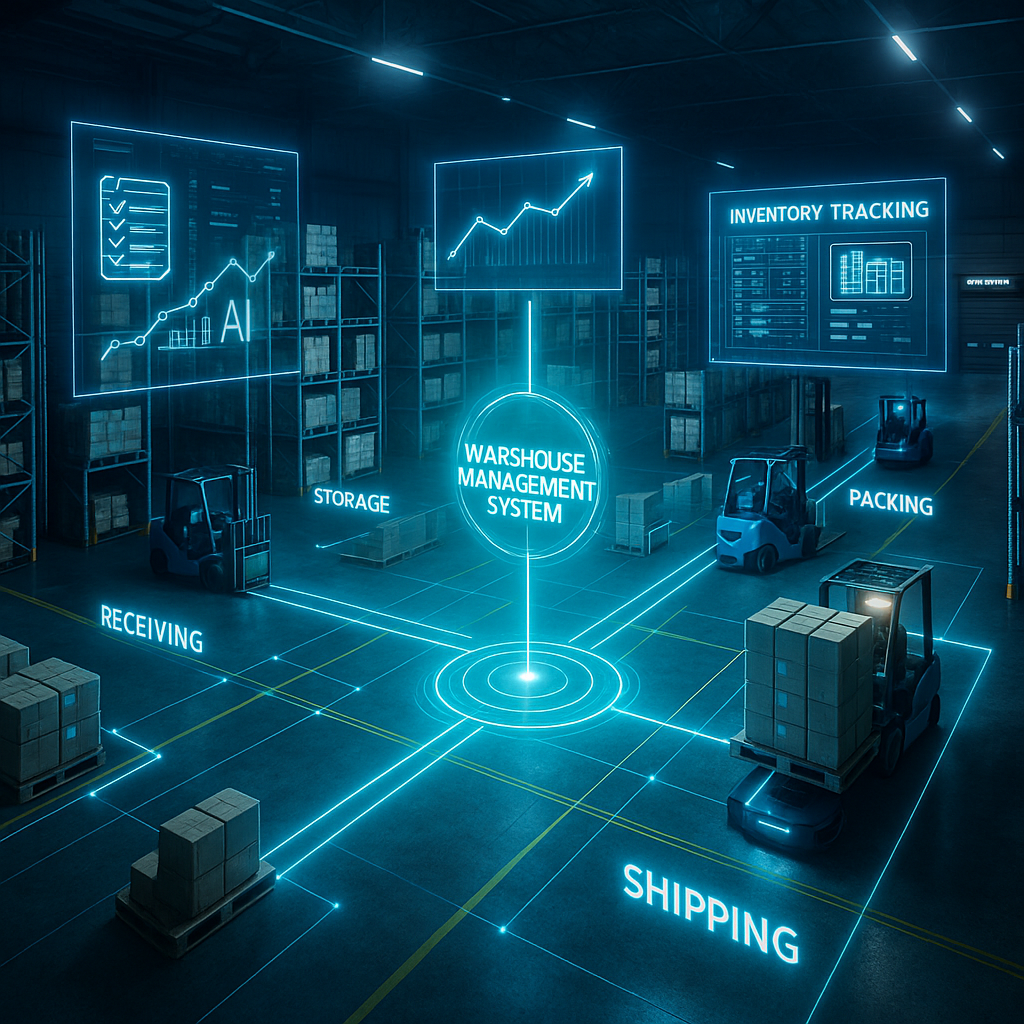
Are you battling frequent stock inaccuracies, late shipments, or labor inefficiency? As of 2024, the global warehouse management system market was...
In the 1990's we started a software company with a team spread-out across the country working remotely. No software solution existed that would allow us to streamline our operations and improve efficiency - so we built our own.
“Working at NEX has been a game-changer for me. I’ve never been part of a team so committed to innovation and collaboration. Every day, I feel like my ideas truly make an impact.”
— Jordan M., Product Manager

Discover how NEX significantly enhanced First Atlantic Commerce's
operations, billing processes, and overall data management efficiency.
Warehouse automation is no longer a futuristic perk for Fortune 500 companies. For small and mid-sized logistics operations, it's becoming essential to stay competitive, cut costs, and boost accuracy. But many teams still hesitate because of outdated assumptions.
Do you think automation is only for massive warehouses with deep pockets? Too expensive? Too complicated to roll out? You are not alone. A recent McKinsey study found that 70 percent of logistics executives plan to invest $100 million in automation over the next five years, and over 75 percent expect to adopt cyber-physical automation by 2027.
This article breaks down the most common myths about warehouse automation, explains what it really means for operations like yours, and shows how SMEs are already using automation to drive efficiency and growth. Let’s start with the basics.
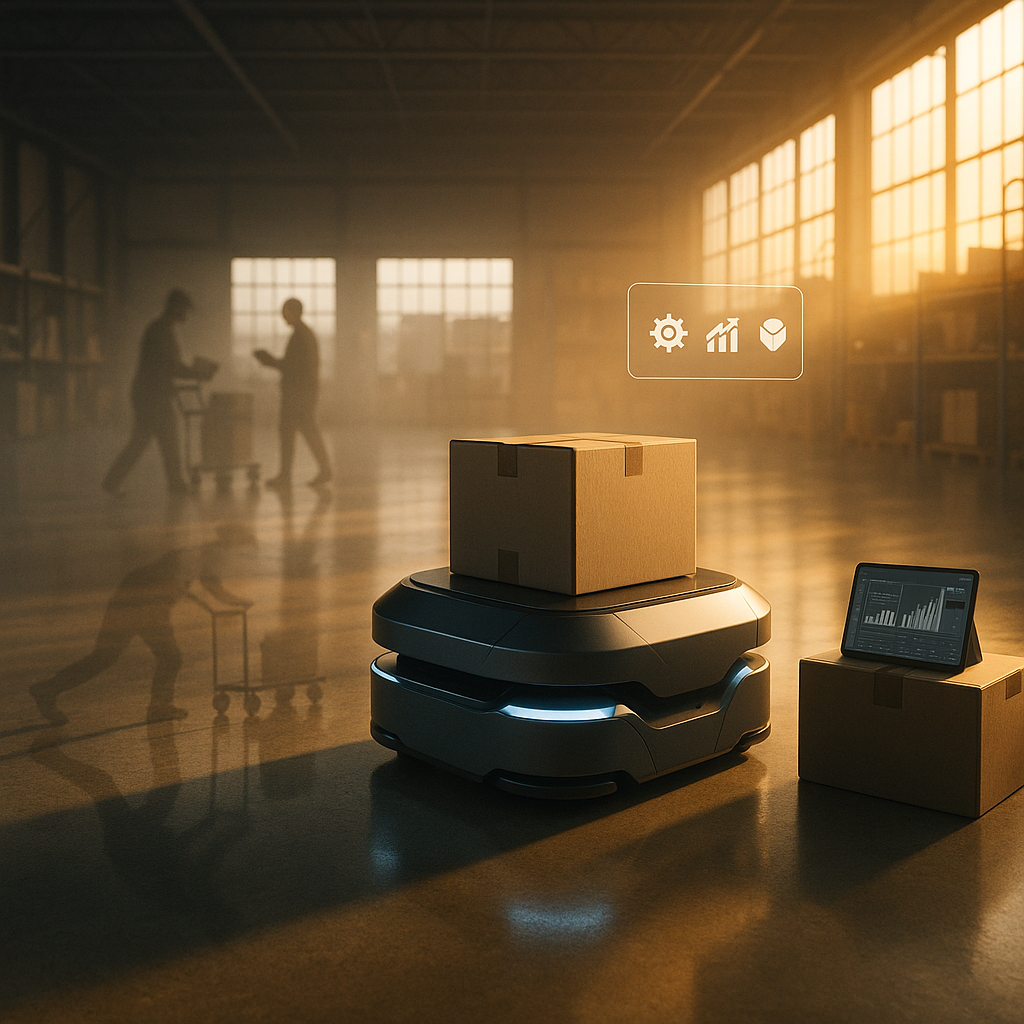
Warehouse automation uses modern technology to streamline repetitive tasks across warehouse operations. It helps warehouse managers reduce labor costs, increase throughput, and improve accuracy without disrupting existing workflows.
Automation systems are now scalable, adaptable, and designed to fit businesses of any size. Whether you're running a traditional warehouse or a high-volume e-commerce hub, automation improves speed, accuracy, and resource efficiency.
Modern warehouse automation is built on a foundation of scalable, flexible technologies designed to optimize warehouse operations at every level. These tools reduce manual effort, improve accuracy, and allow teams to respond faster to changing supply chain demands.
Here are the key systems driving smarter, more efficient warehouses today:
These automation solutions are not reserved for large corporations. They are being used across businesses of all sizes to improve speed, reduce errors, and support warehouse growth without needing to rebuild existing infrastructure.
Misinformation around warehouse automation continues to hold teams back. These myths don’t just create confusion. They lead to stalled decisions, unnecessary costs, and missed opportunities to improve performance.
One reason these myths persist is that many still imagine outdated systems that were expensive, rigid, and difficult to scale. That view is no longer accurate. Today’s automation technologies are modular, cost-effective, and built for businesses of any size.
Another widespread misconception is that automation and AI replace human workers. This is not the case. Automation reduces repetitive labor so employees can take on roles that require oversight, judgment, and leadership, which are roles that improve both operations and job satisfaction.
These myths survive because of unclear messaging from vendors, hesitation to change existing processes, and limited understanding of what modern automation actually offers. It’s time to look at the facts.
These myths are beyond just being outdated and wrong. They're holding back real progress and opportunity. If you’re hesitating to automate, make sure it’s not because of one of these:
Many small and medium-sized businesses assume automation requires a complete overhaul. That’s one of the most common misconceptions in warehouse operations.
In reality, automation solutions are now modular and priced to scale with your operation. You can start small with tools like automated label printing, barcode scanning, or a lightweight warehouse management software. These upgrades reduce labor costs and improve fulfillment speed without disrupting your existing systems.
The cost of waiting often outweighs the cost of getting started.
Automation does not replace people. Rather, it removes repetitive, low-value tasks and allows teams to focus on problem-solving, quality control, and system oversight. Modern warehouses create better roles. Not fewer. As repetitive, manual tasks shift to automation, teams take on roles that involve decision-making, system oversight, and technical skill.
Workers become supervisors, technicians, or analysts. These roles involve greater responsibility and offer higher job satisfaction. The idea that automation erases jobs is rooted in fear, not reality. What it actually does is elevate the people who keep the operation running.
This myth survives because change feels risky. But in practice, automation builds stronger teams, not smaller ones.
Automation is not reserved for industry giants. Businesses of any scale can see measurable gains from simple tools like pick-to-light systems, cloud-based WMS, and autonomous mobile robots.
Smaller operations often benefit sooner. They can improve throughput, reduce order errors, and handle peak volumes without hiring additional staff. You do not need a massive footprint to operate a smart, efficient warehouse.
Complexity is a common excuse, not a fact. Today’s automation tools are designed for fast deployment and seamless integration with your existing hardware and workflows. If your warehouse can run basic operations, it can run automation too.
You don’t need to shut down your warehouse or rebuild from scratch. Many teams implement automation in phases and see results quickly. If you need help, NEX Driver's Warehouse Management Software can help tailor each rollout to specific needs, minimizing disruption while maximizing speed to value.
This idea stems from outdated systems that locked teams into rigid processes. Modern automation actually does the opposite, because it gives managers more real-time control and adaptability.
AI-powered WMS platforms can dynamically adjust picking paths, shift resources, and prioritize urgent orders. With automation in place, you’re equipped to respond faster and more accurately to demand changes. Flexibility is now a feature, not a trade-off.
Many businesses still believe automation is a long-term investment that only pays off after years of disruption and adjustment. That belief doesn’t hold up anymore. With the right solution and a focused implementation plan, automation can deliver measurable returns in less than a year.
Broonson International, a global food trade and distribution company, faced operational inefficiencies caused by disconnected systems, manual data entry, and frequent human errors. After switching to NEX, they gained full visibility into their order lifecycle and eliminated the need to jump between platforms.
They reclaimed over 8 hours of manual work each week, reduced costly mistakes, and tightened process control across departments. Their results included improved accuracy, faster operations, and scalable growth. For operations drowning in spreadsheets and fragmented tools, ROI from automation is not a distant outcome. It starts the moment the right system is in place.
Once you cut through the myths, the reality of automation is clear: it’s not about replacing workers or running a fully robotic warehouse. It’s about giving your team the tools to work faster, more accurately, and with fewer breakdowns in the process.
Automation systems increase throughput, minimize errors, and enable scalable growth. Teams stay lean, operations stay flexible, and managers get real visibility into what’s happening on the floor.
When implemented well, automation creates a foundation for long-term efficiency and scalability. It enables warehouses to adapt to shifting demand, shorten fulfillment cycles, and reduce friction across every part of the operation.
Real-world examples from five leading companies prove that warehouse automation is not about job cuts or complete overhauls. These organizations show that automation works across industries and scales by supporting people, increasing efficiency, and delivering measurable ROI:
At Amazon, over one million robots assist in fulfillment centers around the world, working alongside more than 700,000 employees. These robots are designed to handle repetitive physical tasks, reducing strain on human workers and freeing them up for roles that require oversight, problem-solving, and decision-making. Amazon’s use of automation confirms that the goal is not to eliminate jobs, but to evolve them.
At Walmart’s Distribution Center 6020 in Florida, warehouse associates now work with autonomous forklifts that significantly boost productivity while reducing physical demands. These tools enhance team performance and safety without replacing personnel. Walmart’s approach demonstrates that automation strengthens operations when paired with skilled teams. Not instead of them.
DHL Supply Chain began by implementing automated storage and retrieval systems (AS/RS) in select facilities. After validating performance and ROI at a smaller scale, they expanded globally. This example proves that automation does not require a full-system overhaul. With a phased approach, even the largest operations can evolve step by step.
At A.P. Moller – Maersk, automation and AI systems were deployed to improve adaptability across multiple warehouse environments. These tools help reroute inventory, adjust to shifting demand, and provide end-to-end visibility across complex supply chains. Maersk shows that automation is not about rigid systems. It is about operational agility.
Macy’s introduced warehouse robots to improve picking and sorting performance. The result was a tenfold increase in order capacity and significant reductions in fulfillment time, all achieved within the first year of deployment. Their success illustrates how quickly the right automation strategy can deliver ROI, even for companies outside the tech sector.
NEX works with logistics teams to replace outdated assumptions with practical, proven automation strategies. Whether you are launching your first system or expanding an existing one, NEX helps you implement automation that fits, not one that complicates your operation.
Their services include autonomous mobile robots, conveyor system integrations, and end-to-end automation consulting powered by AI. Each solution is designed to integrate with your current workflows, reduce manual work, and improve speed, accuracy, and visibility.
For businesses that want tighter inventory control and more reliable fulfillment, NEX Driver's Warehouse Management Software gives you the flexibility to scale without starting from scratch.
If you are ready to move on from fragmented systems and inefficiencies, NEX provides automation solutions that reduce risk, increase ROI, and move your operation forward with clarity.
Believing that automation is only for large corporations or that it replaces workers is no longer accurate. Modern warehouse automation is flexible, scalable, and designed to solve real problems for businesses of any size.
Debunking these myths is the first step toward building more efficient, resilient, and future-ready warehouse operations. With the right tools and partners, automation can deliver faster fulfillment, fewer errors, and real ROI.
If you're ready to stop guessing and start automating with clarity, schedule a meeting with us, and let’s talk about how we can support your operation.
Are you battling frequent stock inaccuracies, late shipments, or labor inefficiency? As of 2024, the global warehouse management system market was...
If you manage a warehouse, you already know the risks. Forklifts. Cluttered aisles. Rushed training. Every gap in safety slows your team down and...
Seeing orders pile up, customer complaints rise, or costs creep in because your warehouse can’t keep pace? You’re not alone. Inefficiencies in...