How to Automate Order Processing for Speed, Accuracy, and Scale
Are order delays, manual data entry, and fulfillment headaches eating up your workday? If you’re still relying on spreadsheets and disconnected...
We didn’t start NEX to build software — we started it to solve real operational challenges.
Sales, inventory, purchasing, and operations don’t live in silos, but most systems treat them that way.
NEX connects your entire workflow so your team can manage everything in one place, without workarounds.
“Most ERP systems look good in demos but fall apart in real operations. We built NEX to handle the day-to-day complexity of running a business — with workflows that fit your business, not the other way around.”
— Ned Atalla, Founder & CEO

Discover how NEX significantly enhanced First Atlantic Commerce's
operations, billing processes, and overall data management efficiency.
7 min read

Sophie Atalla : March 23, 2026
Are you tired of chasing down orders, juggling spreadsheets, and getting blindsided by stockouts?
If you're an e-commerce or supply chain manager at a growing business, you already know the cost of poor order management. Delays, inventory errors, and fulfillment mistakes don't just cause internal chaos. They drive customers away. According to PwC, 32% of customers say they’ll walk away from a brand they love after just one bad experience.
That kind of margin for error isn’t sustainable.
The good news? Most order management inefficiencies can be fixed fast. This article breaks down the biggest process killers in small and midsize businesses and shows how smart, integrated systems can streamline fulfillment, improve order accuracy, and protect your bottom line.
Small and midsize businesses juggle complex fulfillment demands across multiple sales channels. When the order management process depends on outdated tools or scattered workflows, operations slow down and accuracy drops. These inefficiencies build pressure at every stage of the order process and create avoidable delays for customers and internal teams.
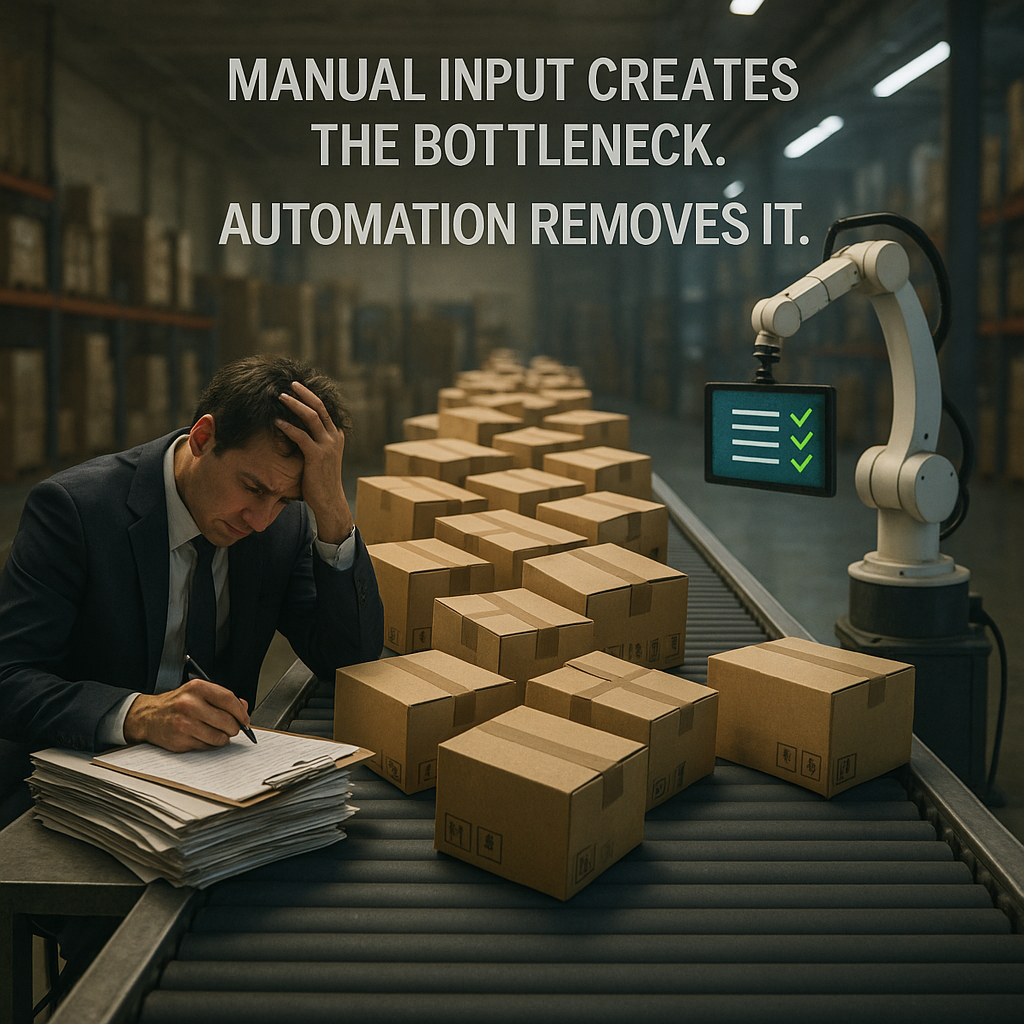
Many SMBs still handle orders through spreadsheets, emails, or basic inventory tools. Each team records the same information in separate places, and every manual entry increases the chance of error. This approach blocks automation and prevents a smooth workflow. As order volume grows, the bottlenecks grow with it. Teams spend valuable time correcting order data instead of improving customer satisfaction or managing higher-priority work.
Without real-time inventory management software, accurate stock levels become impossible to maintain. Businesses often sell products that are no longer available, and customers experience stockouts or unexpected delays.
Manual inventory checks cannot keep up with e-commerce activity across several channels. This creates unreliable forecasting, unplanned reorders, and uneven cash flow. Teams cannot analyze order patterns or optimize restocking without reliable analytics and a unified inventory tracking system.
Manual workflows slow down fulfillment at every stage. Picking, packing, and shipping take longer when teams rely on printed lists or disconnected tools. Inconsistent order routing leads to missed instructions and inaccurate orders. Without automation, businesses cannot scale their operations or reduce errors during peak seasons. Each slow task adds friction to the workflow and increases labor costs over time.
Modern buyers expect real-time order tracking and accurate delivery times. Many SMBs cannot provide this visibility because their systems do not sync order data in real time. Customers send more support inquiries when they cannot see updates on their orders. Internal teams then waste hours searching for the current stage of the order instead of improving operations. This limits operational efficiency and weakens the overall customer experience.
Order and inventory management breaks down when teams work in separate systems. Sales teams promote items without confirming inventory levels. Fulfillment teams prepare shipments without current order data. Customer support teams give estimates without accurate delivery information. These gaps form when companies do not use a unified order management system. Misalignment leads to slow resolutions, incomplete handoffs, and inconsistent service quality across all departments.
Order inefficiencies in SMBs often stem from deeper structural problems. When outdated tools, disconnected platforms, and siloed teams manage the order process, operational breakdowns become unavoidable. Fixing these root causes is essential for any business looking to streamline workflows and improve fulfillment accuracy.
Spreadsheets, emails, and entry-level inventory tools are still common across many small and midsize businesses. These systems cannot handle growing order volume or meet customer expectations for speed and accuracy. Repeating the same data entry across platforms wastes time and introduces avoidable human error.
Without automation, every small update becomes a manual task. Teams are forced to chase status updates instead of focusing on strategic improvements. The longer a company relies on manual order workflows, the harder it becomes to scale operations or reduce fulfillment delays.
When departments use different tools, coordination breaks down. Sales teams promote items without checking inventory. Fulfillment teams miss updates from customer support. No one has full visibility into the current order status, which leads to missed deadlines, inaccurate orders, and slow response times.
Streamlining order management depends on a unified system that keeps every team aligned. Without it, errors increase, workflows break down, and the customer experience suffers.
Most SMBs use several tools to manage e-commerce, shipping, CRM, and inventory. If those platforms aren’t connected, the business spends hours each week manually handling updates. That includes syncing stock levels, processing returns, or adjusting delivery timelines.
Without proper integration, automation is limited. The business cannot provide real-time order tracking, improve inventory accuracy, or analyze order performance. These gaps make it harder to optimize fulfillment and impossible to improve long-term order management strategies.
Inefficiencies in the order management process don’t just slow down internal workflows. They increase costs, frustrate customers, and limit your ability to scale. Outdated workflows ripple through sales, fulfillment, and support, compounding errors at every step.
Stockouts and shipping delays send customers elsewhere. When businesses fail to maintain accurate inventory or miss expected delivery dates, buyers often don’t return. According to PwC, 32% of customers will stop doing business with a brand after a single bad experience. If your business can’t meet demand or communicate clearly, you lose revenue and damage long-term loyalty.
Incorrect shipments and fulfillment errors lead to more returns. These mistakes trigger costly reverse logistics and create extra work for support teams managing refund requests. Without automation to improve order accuracy and reduce manual input, these problems multiply.
Returns management affects profitability at every stage. Each returned order consumes resources that could be used to fulfill new ones.
Today’s customers expect fast shipping, real-time order tracking, and accurate communication. When businesses lack a centralized order management system, they struggle to provide updates or manage expectations. This increases support inquiries and slows down service resolution.
Streamlining order management with the right tools improves communication throughout the entire order placement to fulfillment cycle. That enhances the customer experience and reduces the burden on internal teams.
Manual order processing workflows drive up labor costs and limit capacity. Time is lost on data entry, error correction, and order updates that could be automated. According to Deloitte, companies using smart manufacturing and automation report up to 20% productivity gains and significant cost reductions.
The right order management software helps businesses simplify operations, reduce error rates, and better manage inventory across all sales channels. This allows teams to focus on more strategic tasks while meeting customer expectations more consistently.
Outdated workflows and disconnected tools make it hard for SMBs to grow efficiently. An integrated order management system connects inventory, fulfillment, and sales data in one platform. This removes manual tasks, reduces order errors, and supports faster order fulfillment.
Using separate systems for inventory, orders, and shipping creates delays and confusion. Integrated management software centralizes this information so that all teams work from a single, real-time source. This improves coordination and reduces the need for manual data entry.
A connected platform also supports automation, allowing businesses to streamline the order management process and reduce labor hours.
Accurate inventory levels depend on live updates. Live inventory syncing helps teams prevent stockouts, avoid overselling, and restock confidently across every sales channel. This improves delivery timelines and helps businesses meet customer expectations.
When you manage inventory through one system, you can identify trends, prepare for demand, and avoid last-minute order changes.
An integrated order management system improves fulfillment speed by removing bottlenecks. Automation helps with order routing, pick lists, and shipping coordination. Fulfillment teams no longer need to rely on spreadsheets or manual updates. This structure improves order accuracy and supports consistent performance as order volume grows.
Integrated solutions provide real-time analytics that track order trends, fulfillment rates, and system performance. Businesses can use these insights to improve forecasting, reduce order processing delays, and refine their inventory strategies.
Instead of reacting to problems, decision-makers can focus on long-term improvements that align with business needs.
Choosing the right order management software is critical for businesses looking to streamline fulfillment and scale efficiently. A well-built system should do more than handle transactions. It should automate tasks, reduce order errors, and connect every team involved in order processing.
These features support operational efficiency, improve customer satisfaction, and help you manage inventory across all sales channels with precision.
Your system must integrate with all active sales channels, including e-commerce platforms, marketplaces, and POS systems. This ensures every order flows into one dashboard, reducing the risk of duplicate entries and missed updates.
When your order management process begins with centralized visibility, you can track performance accurately and make better fulfillment decisions across every channel.
A strong order management system should include a built-in inventory management system that provides real-time inventory updates. This prevents overselling, supports accurate reordering, and improves your ability to place an order with confidence.
Automated syncing also allows businesses to manage stock across multiple warehouses and sales platforms without manual reconciliation.
A reliable system must support automation across every stage of the workflow. This includes automated order routing, picking logic, and shipping label generation. When these tasks are automated, businesses can reduce errors, improve order accuracy, and speed up fulfillment.
Without this automation layer, the order processing workflow remains slow, expensive, and vulnerable to mistakes.
Customers expect to know where their order is throughout the entire process. Your system should provide accurate order tracking, from placement to delivery, with real-time status updates available to both your team and the customer.
This visibility reduces customer inquiries and builds trust, especially during high-volume periods when expectations are highest.
To improve your order management strategy over time, the software must include strong reporting tools. This includes dashboards that show fulfillment speed, return rates, order volume by channel, and bottleneck points.
Analyzing order data helps you streamline your order process, refine inventory planning, and enhance order performance across your business.
Broonson International, a global food trading company, struggled to manage international shipments across spreadsheets, shared drives, and disconnected third-party tools. Manual re-entry caused frequent order errors, missed updates, and inefficient workflows. Their existing process couldn’t support growth or meet customer expectations.
They turned to NEX for a solution that would simplify order tracking, eliminate redundancy, and streamline the entire order management process.
Broonson needed a system that could manage every step—from sales documentation and inventory updates to fulfillment and invoicing. Previous tools couldn’t integrate workflows or automate order tasks, and the lack of real-time visibility led to miscommunication between teams.
NEX worked with Broonson to design an integrated order management system tailored to their business needs. The platform unified sales, shipping, and finance teams under one automated workflow. Documents were auto-generated, tasks were assigned in real time, and every step of the order was tracked inside the platform.
Broonson’s leadership highlighted the time savings, improved accuracy, and ease of use as key wins. As they put it, “NEX works for us. Not the other way around.” For the full case study, read the Broonson + NEX success story.
Order inefficiencies don’t fix themselves. If you're still relying on disconnected tools and manual workflows, you're likely losing sales, burning time, and creating avoidable errors that limit growth.
Modern order management systems give SMBs the control, accuracy, and automation needed to scale efficiently. With NEX Driver’s Order Management Module, you can centralize data, automate key workflows, and improve fulfillment performance across all sales channels.
Want to see how it works in action? Book a demo today and explore how NEX can streamline your order operations.
Are order delays, manual data entry, and fulfillment headaches eating up your workday? If you’re still relying on spreadsheets and disconnected...
5 min read
Manual order processing might seem manageable. Until it isn’t. Are you still entering customer orders manually using spreadsheets, emails, or...

4 min read
Is your team still relying on manual processes to handle sales orders? As of early 2025, 70% of B2B sales orders are still processed...