
Future of Automation in Manufacturing (2026): Trends, AI, and What’s Next
Manufacturing today looks nothing like it did a decade ago. Smart, connected factories now run on data, robotics, and industrial automation, with...

Discover how NEX significantly enhanced First Atlantic Commerce's
operations, billing processes, and overall data management efficiency.
5 min read
Operational bottlenecks are points in a business process where work slows down or stops due to inefficiencies or resource constraints. These bottlenecks reduce productivity, increase costs, and delay overall output if not addressed.
Common causes of operational bottlenecks include:
How can technology leaders turn operational bottlenecks into opportunities for efficiency and innovation? Atlassian’s 2024 State of Teams report found that 56% of knowledge workers say teams at their company plan and track work in different ways, making collaboration harder. This inconsistency creates friction, slows execution, and makes bottlenecks more difficult to resolve.
Addressing operational bottlenecks requires more than just identifying delays. It involves analyzing workflows, engaging teams, and leveraging data to implement sustainable improvements that drive long-term performance.
Operational bottlenecks can significantly hinder the efficiency and productivity of your business. It is crucial to identify these bottlenecks in order to address them effectively. One way to identify operational bottlenecks is by analyzing the flow of work and processes within your organization. Look for areas where tasks tend to pile up or where there are delays in completing certain activities.
McKinsey & Company highlights the significance of paying attention to corporate culture and organizational factors in making operational improvements stick. They emphasize that recognizing and adjusting for these elements can lead to more sustainable benefits. For instance, a global chemical company realized that 60% of the value from its efficiency-improvement program came from new work processes rather than new machinery, leading them to adjust their approach and raise their program's goals significantly.
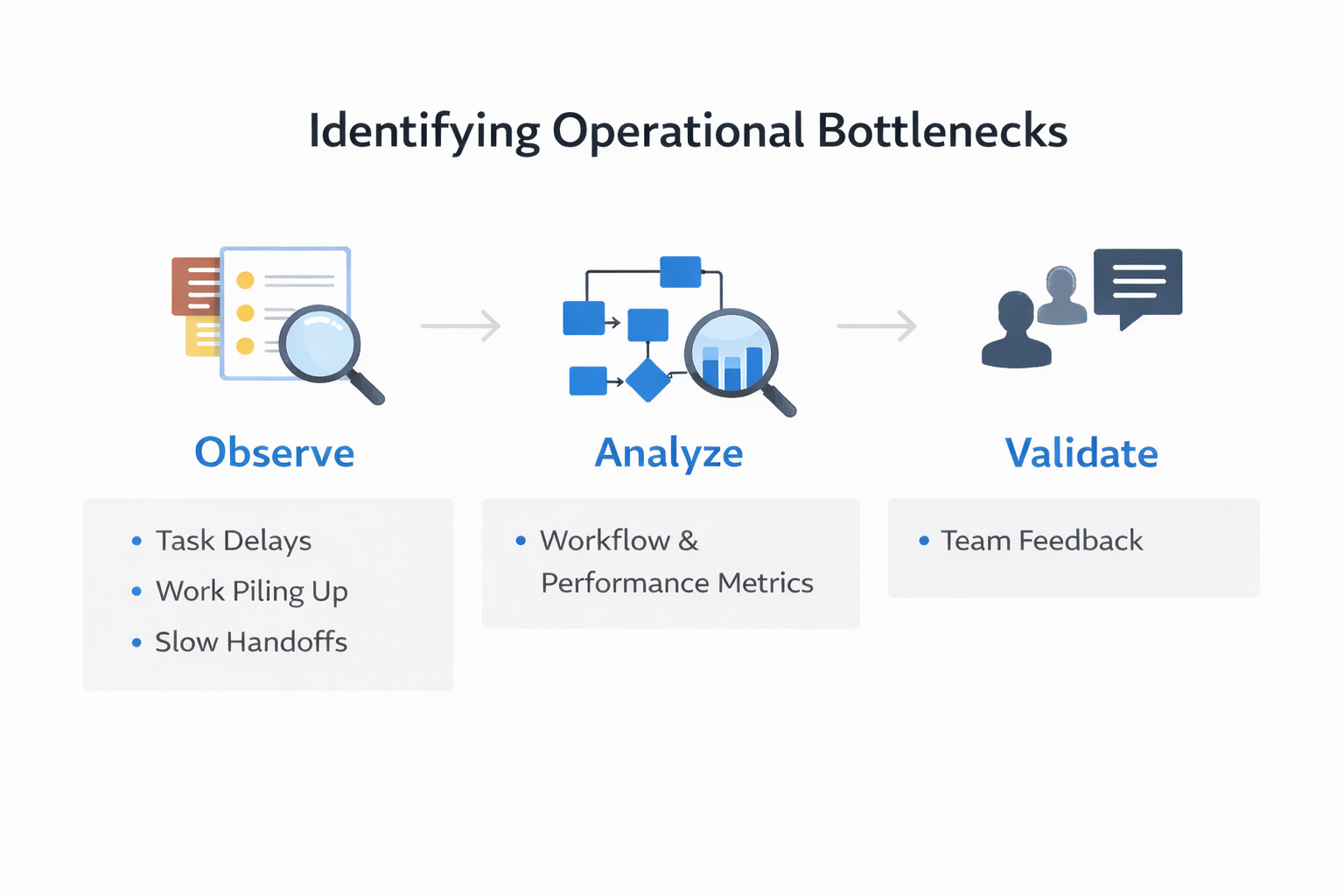
Engaging with your employees and stakeholders is a powerful strategy to uncover hidden operational bottlenecks within your business. By actively seeking feedback from those directly involved in the day-to-day operations, you can gain valuable insights into the specific pain points and challenges they face. This direct input can help you pinpoint areas of inefficiency or bottlenecks that may not be immediately apparent through data analysis alone.
Furthermore, analyzing data and performance metrics is a vital component of identifying operational bottlenecks. By diving into the numbers and trends, you can uncover patterns that point to potential areas of concern. Whether it's a consistent delay in a particular process or a recurring issue with resource allocation, the data can provide valuable clues as to where bottlenecks may be lurking.
Combining the qualitative feedback from your team with the quantitative insights from data analysis creates a comprehensive approach to identifying and addressing operational bottlenecks. By leveraging both sources of information, you can develop a more holistic understanding of your business operations and implement targeted solutions for sustainable success. Once operational bottlenecks are identified, prioritize them based on:
Impact on overall business operations
Frequency of occurrence
Resource constraints involved
Urgency of resolution
Analyzing the root causes of operational bottlenecks is essential for implementing effective solutions. It involves digging deeper into the underlying factors that contribute to the bottlenecks. This can include examining the processes, systems, and resources involved in the affected areas.
Harvard Business School Online explains that root cause analysis is essential for organizational leadership, as it helps articulate the causes of problems to suggest specific solutions. According to research cited by Harvard Business Review, a significant portion of executives believe their organizations struggle with diagnosing problems, which can lead to substantial costs. This emphasizes the importance of root cause analysis in identifying and addressing the deep-seated issues within operations
One approach to analyzing root causes is by conducting a thorough process mapping exercise. This helps visualize the flow of work and identify any inefficiencies or redundancies. Additionally, conducting root cause analysis techniques such as the 5 Whys can help uncover the underlying reasons behind the bottlenecks.
Tableau further elaborates on the techniques and methods for conducting an effective root cause analysis, such as the "5 Whys" approach, which involves asking "Why?" multiple times to drill down to the core issue. This method, along with change/event analysis, helps businesses to systematically prevent and solve underlying issues rather than just treating symptoms. Root cause analysis aims to discover the root cause, understand how to address it, and apply lessons learned to prevent future issues
Implementing efficient solutions is the key to overcoming operational bottlenecks. Once you have identified the bottlenecks and analyzed their root causes, it is important to develop and implement strategies to address them effectively.
To further streamline processes and eliminate process inefficiencies or activities, businesses can also consider implementing lean principles. This involves identifying and eliminating waste in operations, whether it be in the form of excess inventory, overproduction, or unnecessary movements. By adopting a lean mindset, organizations can optimize their processes for maximum efficiency and productivity.
Moreover, optimizing resource allocation goes beyond just assigning tasks to employees. It involves assessing the skills and strengths of each team member and allocating resources accordingly. This strategic approach ensures that tasks are delegated to the most suitable individuals, maximizing productivity and minimizing bottlenecks.
In addition to optimizing resource allocation, providing adequate training and support for employees is essential. Continuous learning and development opportunities not only enhance employee skills but also empower them to tackle challenges more effectively. By investing in the growth and well-being of your workforce, you cultivate a culture of continuous improvement and innovation within your organization.
By incorporating these strategies into your operations, you can create a lean, efficient, and high-performing business that is well-equipped to overcome operational bottlenecks and achieve sustainable success.
It is also important to monitor the effectiveness of the implemented solutions and make adjustments as needed. Regularly reviewing and refining your processes will help ensure continuous improvement and prevent new bottlenecks from arising.
Leveraging technology for operational optimization offers significant benefits for businesses seeking to improve efficiency, reduce costs, and enhance competitiveness. Technologies such as automation, data analysis, and digital communication tools are pivotal in streamlining processes, enhancing decision-making, and fostering collaboration.
Automation plays a crucial role in reducing human error and improving efficiency by handling repetitive tasks across various business operations, from manufacturing and accounting to supply chain management. This leads to cost savings and increased productivity, ensuring tasks are performed consistently and standards are maintained 24/7. By ensuring that tasks are executed consistently and that industry standards are upheld around the clock, businesses can operate more smoothly and effectively. Automation not only frees up valuable human resources to focus on more strategic and innovative tasks but also minimizes errors and delays, ultimately driving operational excellence and competitive advantage.
Data Analysis is another powerful tool, providing businesses with insights to make informed decisions and improve forecasting. By analyzing customer behavior, financial data, and production metrics, companies can tailor their strategies for better outcomes. Tools like Tableau, Microsoft PowerBI, and Excel are used for extracting insights from data, enabling more accurate predictions about sales, production, and costs.
Improving communication and collaboration is essential for a productive workforce. Technology offers tools for video conferencing, instant messaging, and project management, facilitating effective teamwork and customer service, regardless of location. These advancements help companies stay connected and responsive, driving productivity and efficiency.
Moreover, operational optimization through analytics can lead to improved work quality, efficiency, employee and operational performance, accurate data and information, and compliance with regulations. For instance, using analytics platforms like Sigma, businesses have been able to rapidly improve operational efficiencies by as much as 25%, serving more reports and enabling data-driven decision-making without the constant need for IT or data team intervention.
Overcoming operational bottlenecks is an ongoing process that requires continuous monitoring and improvement. It is important to establish a system for monitoring key performance indicators (KPIs) and regularly assessing the effectiveness of implemented solutions.
Continuous monitoring and improvement are essential for overcoming operational bottlenecks and driving ongoing success within organizations. McKinsey emphasizes the importance of instilling continuous improvement as a daily habit among leaders to ensure long-term organizational health. This approach requires leaders to adjust their routines and prioritize new behaviors linked to business results, promoting a culture where continuous improvement becomes intrinsic to job roles.
McKinsey further illustrates the impact of continuous improvement through a case where a client saved more than 80% of time in their product testing process by making a large number of small changes. This demonstrates how a steady stream of improvements can have transformational results, emphasizing the value of performance transparency, knowledge sharing, and employee involvement in fostering a continuous improvement culture.
In addition, fostering a culture of continuous improvement within your organization is crucial. Encourage feedback from employees and stakeholders, and provide opportunities for professional development and training. This will create a mindset of actively seeking out and addressing bottlenecks to drive ongoing success.
As we look to the future, it's evident that the finance industry and technology will continue to evolve, bringing new challenges and opportunities. In this environment, the capacity to leverage operational bottlenecks as catalysts for innovation will distinguish the leaders from the followers. Explore how the NEX platform can empower your business to achieve operational visibility and efficiencies.

Manufacturing today looks nothing like it did a decade ago. Smart, connected factories now run on data, robotics, and industrial automation, with...
.png)
Did you know that a recent McKinsey survey found 66% of business leaders are now piloting automation in at least one business process? This statistic...
.png)
1 min read
Tech leaders in the finance sector are always looking for ways to improve their operations, aiming to boost both efficiency and financial outcomes. A...